
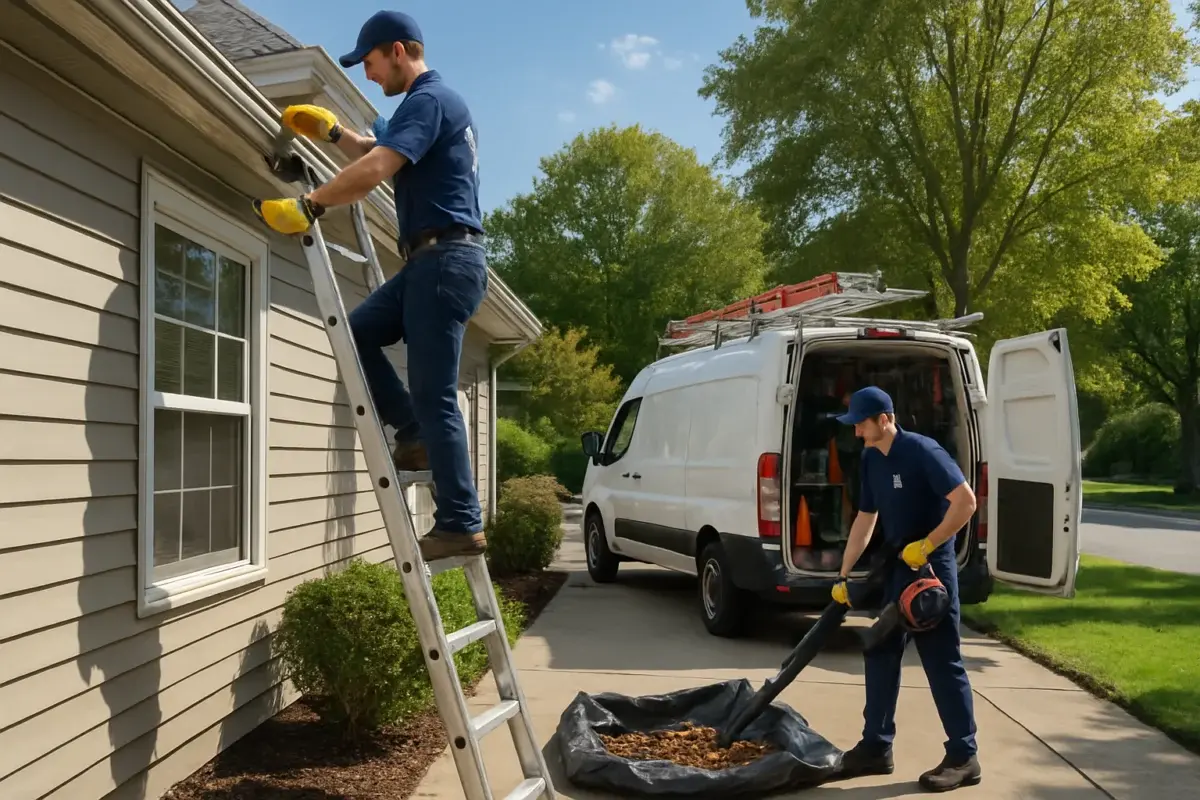
Starting a gutter cleaning business is one of the fastest, lowest-cost ways to get into the home service trades. You do not need a truckload of equipment, you can charge useful margins, and repeat customers are common when you do the job reliably. This guide walks you through startup costs, the exact gear to buy, pricing strategies, first 30 days of operations, marketing that actually gets calls, and systems to scale from solo operator to a small crew.
Why gutter cleaning makes sense as a starter business
Gutter cleaning is local, high-need, and easy to explain over the phone. Most homeowners do not like climbing ladders, and many do not have time. That creates a steady demand from spring through fall in most markets. You can start part time, reinvest profits, and scale with a van and one or two crew members.
Margins can be healthy. Labor is the main cost. If you price right and avoid underquoting, you can build a business that supports full time pay quickly.
Startup costs and budget breakdown
Expect to spend between $1,500 and $8,000 to get started. The wide range depends on whether you already own a reliable vehicle, and how much new equipment you buy.
One-time purchases
- Extension ladder (28 to 32 foot), rated professional grade: $200 to $500
- Protective ladder standoffs or ladder hooks: $50 to $150
- Gutter scoop, hand tools, and trowels: $20 to $80
- Leaf blower with gutter attachment, or wet/dry vac: $200 to $700
- Safety gear: gloves, eye protection, harness if using roof work: $100 to $300
- Bucket, drop cloths, tarps, and cleanup tools: $50 to $150
- Basic van or truck upfit (racks, tie downs): $200 to $1,000
- Business setup costs (LLC filing, basic insurance, permits): $200 to $1,000
Recurring costs
- Insurance: general liability and hired and non-owned auto, $500 to $2,000 yearly depending on coverage and state.
- Fuel and vehicle maintenance: variable, budget $100 to $400 per month early on.
- Marketing and lead generation: $0 to $1,500 per month depending on strategy.
- Software/CRM: $20 to $200 per month.
Equipment list: buy smart, not expensive
Buy gear that lasts. Cheap ladders fail. Cheap blowers die. But do not overbuy specialty gear you will not use for months.
Essential gear for day one
- Reliable extension ladder with stabilizer. You will use this every job.
- Gutter scoop and bucket. Manual clearing is still the primary method.
- High-quality cordless or gas-powered blower with gutter attachment. Makes cleanup faster and reduces mess complaints.
- Work gloves, safety glasses, and knee pads.
- Tarps or drop cloths to protect landscaping and collect debris.
- Basic hand tools: hammer, screwdriver, sealant gun for minor repairs.
Nice-to-have early upgrades
- Telescoping poles with brush or vacuum heads for one-person jobs from the ground.
- Wet/dry shop vac for downspout clogs.
- Simple gutter inspection camera for upsells and reporting to customers.
Legal setup, insurance, and permits
Protect yourself. An LLC is cheap and separates personal assets. Check local requirements for contractor licensing. Most areas do not require a specialty license for gutter cleaning, but cities vary.
Insurance is non-negotiable. General liability covers property damage. If you use a vehicle, add hired and non-owned auto coverage and commercial auto if you use a work vehicle regularly. Ask your agent about worker coverage if you hire.
How to price gutter cleaning jobs
Pricing is where many new operators fail. Too low and you burn out. Too high without explaining value and you lose the job. Aim for transparent, defensible pricing that covers labor, travel, disposal, and profit.
Pricing models to choose from
- Per linear foot. Good for uniform roofs and simple gutters. Simple to quote but can miss roof complexity.
- Flat rate per home tier. Common in the industry. Example tiers: single story up to 1,200 sq ft, two story up to 2,400 sq ft, complex homes priced higher.
- Time-and-materials. Rarely used, but useful for commercial or unknown conditions.
Suggested beginner pricing ranges
These are example ranges. Adjust for local cost of living and competition.
- Small single-story home: $80 to $150.
- Average single-story or small two-story: $150 to $250.
- Larger two-story or complex roof lines: $250 to $450.
- Downspout clearing or minor repairs: $30 to $100 extra.
- Seasonal cleanup or heavy debris, per hour / per person option: $75 to $125 per hour.
How to build a sample pricing sheet
- Create three to four tiers by height and roof complexity.
- Factor labor. One person can usually do a small house in 1 to 1.5 hours. Price labor to pay yourself $30 to $60 per hour after taxes and overhead.
- Add travel fee if you serve rural areas.
- Add disposal fee for excessive debris or green waste if your landfill charges.
How to give a quote over the phone
Be calm and clear. The goal is to book a visit or the job. Ask the right questions quickly. Over phone, gather roof height, number of stories, visible debris, and last cleaned date.
Quick phone script
“Thanks for calling. I can get you scheduled. Is the house one or two stories? Do you see lots of leaves, shingle debris, or any plant overhang? Typically a one-story runs $X to $Y and a two-story $A to $B. If that sounds okay I can book you, or I can come by for a free estimate.”
Marketing and getting your first clients
Early marketing should focus on low-cost, high-return actions. You are a local business. Local visibility matters more than fancy websites at first.
Free and low-cost lead sources
- Google Business Profile. Claim your listing, add photos, set service area, and ask satisfied customers for reviews. This is often the top source of calls.
- Nextdoor and Facebook Marketplace. Post service offers and respond to neighborhood posts. Ads here can be cheap and well-targeted.
- Door hangers in targeted neighborhoods. Focus on leafy neighborhoods with older trees. Keep messaging simple and include a call-to-action like “book online for $20 off.”
- Partner with roofers, landscapers, and property managers. Offer referral fees for steady leads.
Paid channels that work early
- Local Facebook ads with neighborhood targeting. Run seasonal promos in fall and spring.
- Google Ads local intent keywords like “gutter cleaning near me.” Start small and scale once you see conversions.
Local SEO quick wins
Rank for “gutter cleaning near me” and neighborhood keywords by doing these basic things right.
- Complete your Google Business Profile and keep hours and phone consistent across platforms.
- Create city-specific landing pages on your website for 3 to 5 local neighborhoods. Keep content short, useful, and unique.
- Get reviews. Ask every happy customer for a review and show them how to leave one.
Operations: scheduling, routing, and quality control
One disorganized day can kill your reputation. Set basic systems from day one.
Daily ops checklist
- Confirm next day jobs by text or call the afternoon before. Reduce no-shows.
- Load equipment on a checklist so you do not forget blowers, tarps, and safety gear.
- Take before and after photos and send them to customers with an invoice. It reduces disputes and helps marketing.
Routing and dispatch
Group jobs by neighborhood when possible. That reduces travel time and increases daily capacity. If you use routing software, pick one that integrates with your scheduling tool. For small operations, manual route planning with a simple map works fine early on.
Customer communication and sales tips
Clear communication wins jobs. Use short, confident answers and set expectations. Price transparently and explain why you charge what you do.
Handling objections
- If price is the objection, explain what is included and the value of reputable work. Offer to do the job for a slightly reduced scope, like clearing only front gutters as a one-time trial.
- If they want a lower price because a neighbor quoted less, ask when that neighbor is available. You can often win by being available and professional.
Hiring your first helper and crew basics
Hire slow. Train fast. Your first hire should be someone trustworthy who can handle ladders and follow safety rules.
Simple crew roles
- Lead tech. Handles ladder work and inspections.
- Helper. Clears debris, bags waste, and does cleanup.
Start by paying hourly with clear expectations. Move to piecework or productivity bonuses once you know average job times.
Software and software comparisons for small gutter businesses
Pick software that covers scheduling, invoicing, and photos. You do not need the most expensive system at first.
Affordable options
- Jobber. Easy to use, strong for small teams, good for service area businesses.
- Housecall Pro. Good mobile experience and payment processing.
- Workiz. Strong for lead management and integrates with call tracking.
- ServiceTitan. Great for larger operations but expensive for beginners.
Try free trials. Prioritize easy scheduling, photo attachments, and invoicing. If you run everything on spreadsheets, you will reach growing pains fast.
Common beginner mistakes and how to avoid them
- Underpricing to win jobs. Track your true hourly cost and include overhead.
- Skipping insurance. A single property damage claim can sink you.
- Not documenting work. Take before and after photos and keep records of calls and quotes.
- Trying to be all things. Focus on gutter cleaning and a few add-on services like downspout clearing and minor repairs early on.
Scaling to a reliable $100K business
To reach $100K revenue, focus on capacity and repeat business. If your average job nets $200 and you aim for $100K, you need 500 jobs a year. That is about 10 jobs per week, which is doable with one van and a helper in the busy season.
Steps to scale
- Systemize your quote process and pricing so any crew member can give consistent quotes.
- Document workflows for setup, cleanup, and photo delivery.
- Invest in scheduling software that reduces manual calls and automates confirmations.
- Hire one reliable helper, train them, and add a second vehicle when you regularly book more than 10 jobs a week.
Troubleshooting: why leads dry up and what to do
If calls drop, check these common issues. First, are you visible? Is your Google Business Profile active and collecting reviews? Second, are your prices competitive for your market? Third, are you doing seasonally targeted marketing? If none of these, track where your last 20 leads came from and double down on the top two sources.
Quick fixes
- Run a targeted Facebook promotion with a clear discount for the next two weeks.
- Ask 10 happy customers for reviews and follow up with a text and link.
- Door hang three nearby neighborhoods this weekend and follow up the next week with a targeted call or postcard.
Reporting and tracking the right numbers
Track these metrics weekly: booked jobs, conversion rate from calls to booked, average ticket value, labor hours per job, and gross margin. Those numbers tell you if pricing or production is the bottleneck.
Simple profit formula
Revenue minus direct labor, materials, and fixed overhead gives gross profit. Keep overhead lean early. Reinvest profits into marketing and an extra truck only when your current crew is booked and you have repeatable processes.
How to price seasonal contracts and maintenance plans
Offer annual maintenance plans for consistent revenue. Example: two cleanings per year plus priority scheduling and minor downspout checks. Price at a 15 to 25 percent discount off a one-off price to encourage signups. This builds recurring revenue and helps smooth seasonal troughs.
Comparing CRMs and why it matters
If you compare Jobber, Housecall Pro, Workiz, and ServiceTitan, factor in price, ease of use, and integrations. Jobber and Housecall Pro are great for small crews. Workiz targets lead management performance. ServiceTitan is more of an enterprise solution. Start with a simpler tool and migrate later if you need advanced reporting.
As your operation grows, missed calls, no follow-up, juggling multiple apps, and scattered customer info become the big hurdles. Autopilot ties scheduling, dispatching, invoicing, calls, texting, and marketing together. It replaces the patchwork of tools with one platform that helps you book more jobs and run cleaner operations backed by real data. Try it as a single place to stop losing leads and start scaling cleanly.