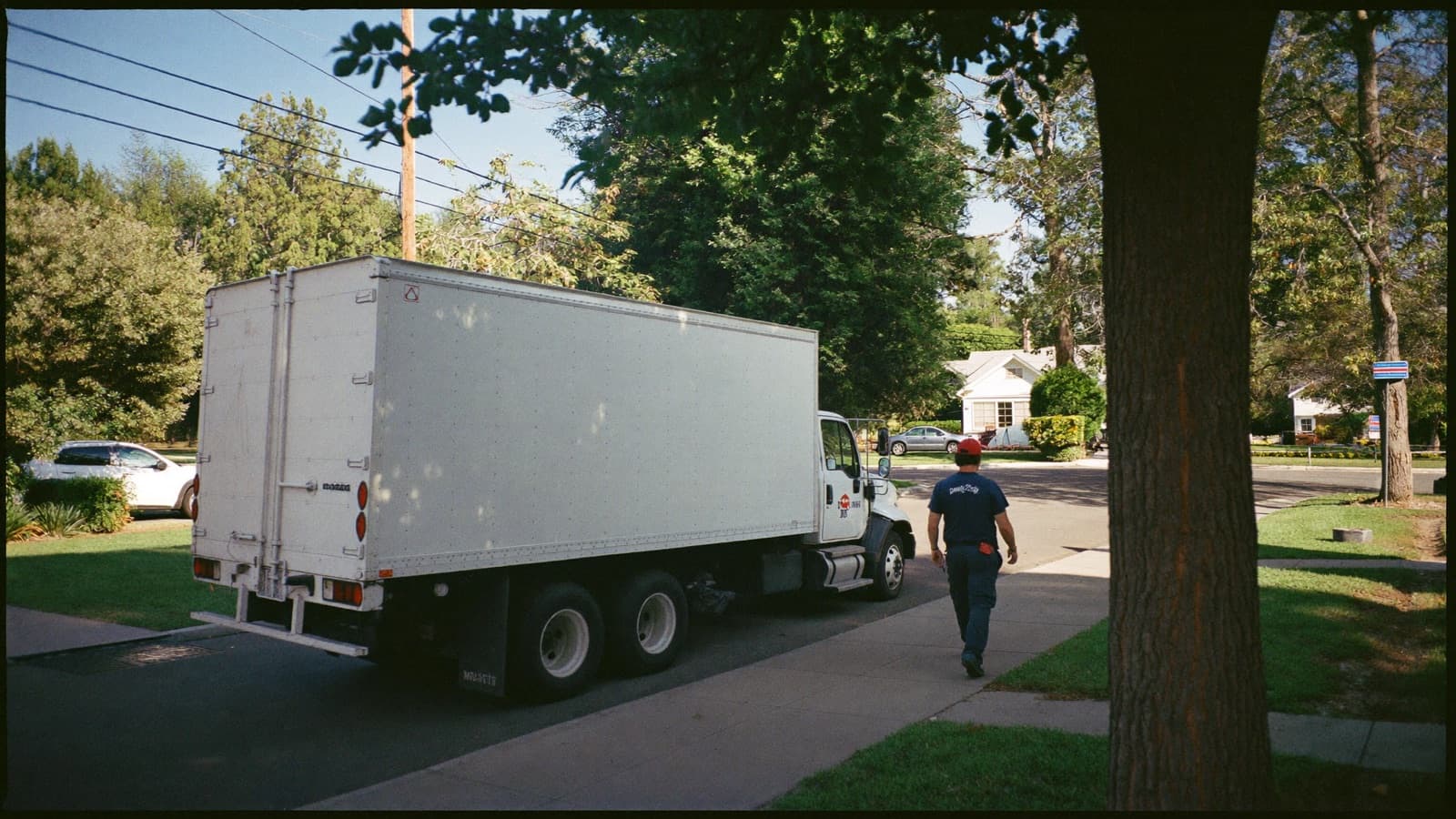
Table of contents
- Why junk removal leads are the whole game
- Start with branding you can actually afford
- Pound the pavement: yard signs, walk-ins, and your own phone
- Match the tactic to your revenue stage
- SEO, social, and content: the slow compounding channels
- Paid ads: Facebook first, Google when you are ready
- Cold outreach: the channel nobody wants to run
- What to do this week
- FAQ: how to get junk removal leads
- Keep the truck full without living on your phone
New junk removal owners obsess over the wrong problems. What truck should I buy? How do I price a job? Where do I dump a couch? I get it, those questions feel scary on job one. But they are all learnable in your first month, on the job, for free. The thing that actually kills junk removal businesses is junk removal leads. Not pricing. Not trucks. Leads.
I built Jedi Junk Removal to over $1,000,000 in gross sales in my first year. I got off the truck in 6 months, off the phones in 8, expanded to a second location, and sold the company after 2 years and 4 months. By the time I sold, we had done over $2 million in junk removal jobs, and I had spent roughly half a million dollars of my own money on Google Ads and Local Services Ads figuring out what works.
This post is the whole stack: branding, pounding the pavement, SEO, social media, content, paid ads, and cold outreach. I made a 47-minute video covering all of it if you want the full version: everything I know about junk removal leads. Here is the written playbook.
Why junk removal leads are the whole game
Think about what a junk removal business actually is. A truck, a couple of strong backs, a dump account, and a phone that rings. The first three are easy to buy. The fourth is the business.
Every stalled operator I have ever talked to has the same problem. They are not confused about pricing. They are sitting in a driveway at 11am on a Tuesday with an empty schedule. Systems and scaling matter, but they only matter after you are booked. So before you spend a week researching software or agonizing over trailer configurations, get honest about the one metric that decides everything: how many qualified calls and form fills you generate per week.
The other thing to understand is that no single channel fills a truck. A busy truck comes from stacking channels. Yard signs plus Facebook plus Google Business Profile plus walk-ins plus ads, layered over months. Every operator wants the one magic tactic. It does not exist. The magic is the stack.
Start with branding you can actually afford
Branding sounds like big-company stuff, but for a local service business it just means this: how do people see and remember you? Your name, your shirts, your truck, your cards, your online presence, and how you act on the job.
Before you aggressively hit the market, build a professional presence in a weekend:
- Uniforms, even if that is just matching printed t-shirts
- Truck decals now, a wrap as soon as you can afford it
- A simple pricing sheet you can hand to customers
- Google Business Profile, a basic website, and profiles on Facebook, Instagram, TikTok, Yelp, and the rest
- A lead capture form on that website so visitors can request a quote without calling
At Jedi we leaned all the way into the theme: the name, the presentation, even the phone hold messaging. Branding alone will not fill your truck this week. What it does is make every other channel convert better, because when the yard sign or the Facebook post sends someone to look you up, they find a real company instead of a guy with a Gmail address.
Pound the pavement: yard signs, walk-ins, and your own phone
This is the unglamorous work that new operators skip, and it is exactly why they stay slow. If you are under about $5,000 a month in revenue and you are not already great at digital marketing, pavement pounding is close to mandatory.
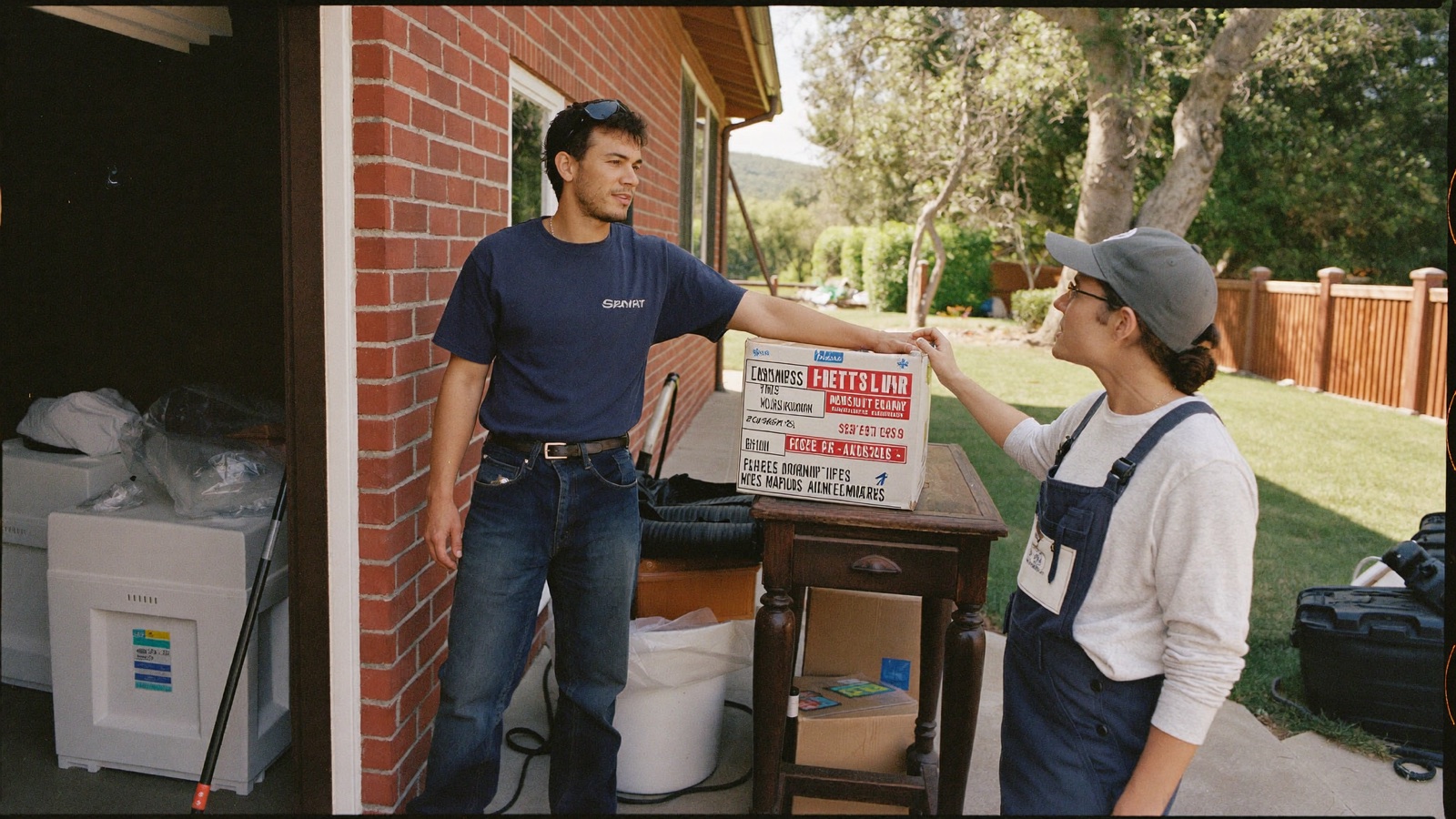
Yard signs are the fastest offline channel I have tested. My working numbers: put out 10 signs a day, expect roughly one closed job for every 20 signs, and budget about $350 for 300 signs with stakes. Reorders get cheaper. Use a tracking number on the sign so you know it is the sign producing calls and not something else. After residential jobs, ask the customer if a branded sign can stay in their yard for a week or two. I would offer around $20 for that. A sign in a real customer's yard is proof, not just advertising.
Business walk-ins are the second leg. Do 10 to 15 per day: apartment complexes, storage facilities, real estate offices, property managers, nursing homes, assisted living, boutique hotels, and any plaza with an overflowing dumpster. Show up in a branded shirt with cards and flyers. I used to bring cheap gift baskets from Dollar Tree. The goal is not to close a job on the spot. The goal is to get on their vendor list, so that when a unit gets abandoned or a tenant leaves a garage full of furniture, you are the number they already have.
Third leg: your own phone. Record a short selfie video saying you started a junk removal company, and send it to every single contact. Ask if they or anyone they know needs junk removed. It feels awkward. Do it anyway. Your first jobs are hiding in your contact list.
Two more pavement layers worth stacking. Door hangers: leave them on the same streets where your yard signs sit, and on every house around a job you just finished. Neighbors saw your truck all afternoon, so the hanger lands on a warm audience. And if you want to saturate a neighborhood harder, USPS Every Door Direct Mail lets you send postcards by mail route for around 18 cents per piece before design and printing. I treat EDDM as an optional layer once signs and hangers are already producing, not a starting point.
Networking rounds it out. BNI chapters, Chamber of Commerce mixers, and local business meetups all work if you are the kind of person who likes meeting people. One realtor who trusts you is worth more than a hundred impressions, because realtors touch cleanouts every single month.
If you want the full zero-budget version of this playbook, I broke down 10 free ways to get junk removal jobs in a separate post.
Match the tactic to your revenue stage
I organize every junk removal marketing tactic on a quadrant: cheap versus expensive, fast versus slow. The mistake that wrecks new operators is jumping into expensive, slow channels before the cheap, fast ones are running as daily habits.
| Revenue stage | Focus | Example tactics |
|---|---|---|
| Under $5k/month | Cheap and fast | Yard signs, Craigslist, Facebook groups and Marketplace, walk-ins, door hangers |
| Growing | Layer cheap and slow | Google Business Profile, reviews, referrals, networking, social posting |
| Established margins | Add expensive channels | Google Ads, LSAs, SEO investment, direct mail |
Two rules from that table. First, when you add a new layer, do not stop the old one. Turn each tactic into a standard operating procedure: repost Craigslist daily, put out a set number of signs each week, leave door hangers after every job, message a few realtors a day. Second, do not touch Google Ads until you have real margins and money set aside. My rule of thumb is around $15,000 available before you seriously pursue paid search, because a good campaign should target a 3 to 5x return on ad spend, and you will still eat bad months closer to 2x while it learns.
SEO, social, and content: the slow compounding channels
Search engine optimization is the channel everyone wants because the leads feel free. They are not free, they are prepaid with months of work. But for junk removal it absolutely works, because people search exactly what they need: junk removal near me, mattress disposal, hot tub removal.
The short version: a five-page website cannot compete. You need a page for every service and every city or area you serve, each one actually written about that topic, with real photos of your crew working. I wrote a full guide to junk removal SEO that covers on-page structure, city pages, and backlinks.
Content marketing feeds the same machine. Film your jobs. Post Facebook Reels, Instagram Reels, and YouTube Shorts. Make long-form videos on topics people search: hot tub removal, mattress disposal rules, where to donate furniture in your city. And do not sleep on your personal Facebook profile. People buy from people. Add local residents and realtors daily, post your jobs alongside your normal life, and your profile quietly becomes one of your best referral channels.
Paid ads: Facebook first, Google when you are ready
Paid ads are the accelerant, not the foundation. Here is the order I recommend.
Start with Facebook at around $15 a day. Facebook users are scrolling, not searching, so the leads are colder and cheaper, and they need fast follow-up. Run lead form campaigns, connect the form to an instant text-back, and put every lead into an automated follow-up sequence so nobody falls through. My six months of testing turned about $4,500 in spend into roughly $15,000 in tracked jobs, including an $11,500 hoarder house. The full setup is in my junk removal Facebook ads post.
Google Ads is the bigger channel, and the more dangerous one. Search traffic is people who need a couch gone today, which is why I spent $250,000 on Google Ads in my first year and generated close to $1.1 million from that channel. But it punishes weak fundamentals: no conversion tracking, no negative keywords, nobody answering the phone. I wrote the complete system in my junk removal Google Ads guide, including budgets by market size and the negative keyword list that saves you thousands.
One rule for every paid channel: only run ads when a human or an AI can answer the phone. A missed call from a $50 click is the most expensive kind of silence in this industry.
Cold outreach: the channel nobody wants to run
Commercial accounts do not come from yard signs. They come from outreach. Property managers, apartment complexes, storage facilities, and realtors all have recurring junk problems, and almost none of your competitors are contacting them systematically.
The system I used: scrape a list of local property managers from Google Maps, then work it with cold email, ringless voicemail drops, and careful cold texting. A single property management relationship can be worth dozens of jobs a year, so even a 2 percent response rate on a few hundred contacts changes your business. Keep the messaging short and specific: who you are, what you haul, proof you are insured, and an easy way to book.
This channel pairs with pavement pounding. The walk-in gets you remembered, the follow-up email keeps you remembered, and the voicemail drop six weeks later catches them the day a tenant abandons a unit.
What to do this week
If you are starting from zero, here is the seven-day version of everything above:
- Monday: set up Google Business Profile, order 100 yard signs, print a pricing sheet.
- Tuesday: send your selfie video to every phone contact. Post in three local Facebook groups.
- Wednesday: 10 business walk-ins. Storage facilities and real estate offices first.
- Thursday: put out 10 yard signs with a tracking number. Repost on Craigslist and Facebook Marketplace.
- Friday: message 10 people giving away free items on Marketplace. Offer to haul the rest of their junk.
- Saturday: work whatever jobs came in. Photograph everything for your website and socials.
- Sunday: ask every customer from the week for a Google review, then build next week's quota list.
Do that every week for 90 days and you will have a lead problem in the good direction.
FAQ: how to get junk removal leads
What is the fastest way to get junk removal leads?
Yard signs and direct outreach. Signs at busy intersections with a tracking number start producing calls within days, and roughly 20 signs average one closed job. Pair them with 10 business walk-ins a day and a personal video to everyone in your phone, and most new operators can book their first jobs inside two weeks.
How much should junk removal leads cost?
It depends on the channel. My Google Ads conversions ran about $50 to $55 each, and Local Services Ads leads ran $60 to $90. Facebook leads come in far cheaper but close slower. Free channels cost time instead of money: figure hours of daily posting, walk-ins, and sign placement while you are under $5,000 a month in revenue.
Are lead generation companies worth it for junk removal?
Platforms like Thumbtack and similar aggregators often sell the same lead to multiple companies, so you end up racing competitors on speed and price. They can work for cash flow when a new truck needs to stay busy, but treat them as a bridge, not a foundation. Owning your own channels beats renting someone else's leads.
When should a junk removal business start running Google Ads?
When you have strong margins, someone answering every call, and money set aside. I recommend around $15,000 available before you get serious, because campaigns need weeks of data to optimize and you have to survive the learning period. Until then, stick to cheap and fast tactics plus Facebook at $15 a day.
How long does it take to get steady junk removal work?
Treat lead generation as a full-time daily grind for at least 90 days. Most of the operators I have watched succeed spent hours every day on signs, walk-ins, posting, and outreach before the phone rang on its own. The channels compound: reviews stack, referrals start, repeat customers come back, and around month three the schedule stops feeling empty.
Keep the truck full without living on your phone
Every channel in this playbook produces calls, texts, and form fills, and they all die if you respond slowly. Autopilot plans start at $49 a month, with two-way texting on Crew at $99 and automated sequences plus the AI voice assistant on Full Throttle at $149. Start a free trial or check the full pricing breakdown.