Table of contents
- Why junk removal is still the lowest barrier home service
- Step 1: Do not buy a truck yet
- Step 2: The only equipment you need on day one
- Step 3: Set up the business in one week
- Step 4: Price junk removal jobs by volume
- Step 5: Get your first 20 jobs without paid ads
- Step 6: Disposal is a profit center, not an errand
- When to add software to your junk removal business
- FAQ: starting a junk removal business
- Get the boring stuff off your plate
In 2020 my travel software startup got crushed by COVID. I had a newborn, rent due, and about $4,000 to my name. A friend suggested hauling junk. I thought he was joking. Fourteen months later my company, Jedi Junk Removal, had grossed $1.1 million. Two years and four months in, we had done $2.2 million at roughly 25% margins, and I sold the business for $225,000.
So when I explain how to start a junk removal business, I am not repeating something I read. I lived every step: the rented pickup, the first Craigslist ad, the first employee, the first $1,000 day. This guide is the playbook I would run if I had to start over in 2026, with real numbers from my own books.
One warning before we start. The service is easy. The business is hard. Anyone can carry a couch. Building a machine that produces booked jobs every single day is the actual work, and that is what this guide is really about.
Why junk removal is still the lowest barrier home service
Junk removal fills the gap that waste management companies will not touch: garages, attics, estate cleanouts, storage units, overflowing dumpsters, and commercial cleanouts. Your customer is not paying for a skill. They are paying to not spend their Saturday wrestling a sleeper sofa down a staircase, renting a truck, and figuring out their city's disposal rules.
That means no trade school, no years as an apprentice, and in most places no special hauling license (more on that below). Compare that to HVAC or plumbing and the barrier to entry is a joke.
The money is real too. A single truck can gross $20,000 to $30,000 a month in a lot of markets, and $50,000 to $70,000 a month in a market like Los Angeles when it is running hard. As a solo operator your margins can sit around 70% because your main costs are gas, dump fees, and some scrappy marketing.
The catch: more people know this than in 2020. The market has more competition because guys like me keep making videos about it. You can still win, but you cannot show up lazy. If you want the full picture of the trade itself, I keep a whole page on how Autopilot fits junk removal businesses specifically.
Step 1: Do not buy a truck yet
The biggest mistake new operators make is buying a vehicle before they have proof of demand. You do not need to own anything to take your first jobs. Book two or three jobs for the same day, rent a pickup from Home Depot or U-Haul for the day, and stack the jobs back to back. The rental costs get covered by the first job and everything after is profit.
Once jobs are coming in consistently, climb the equipment ladder in this order:
- A used pickup truck
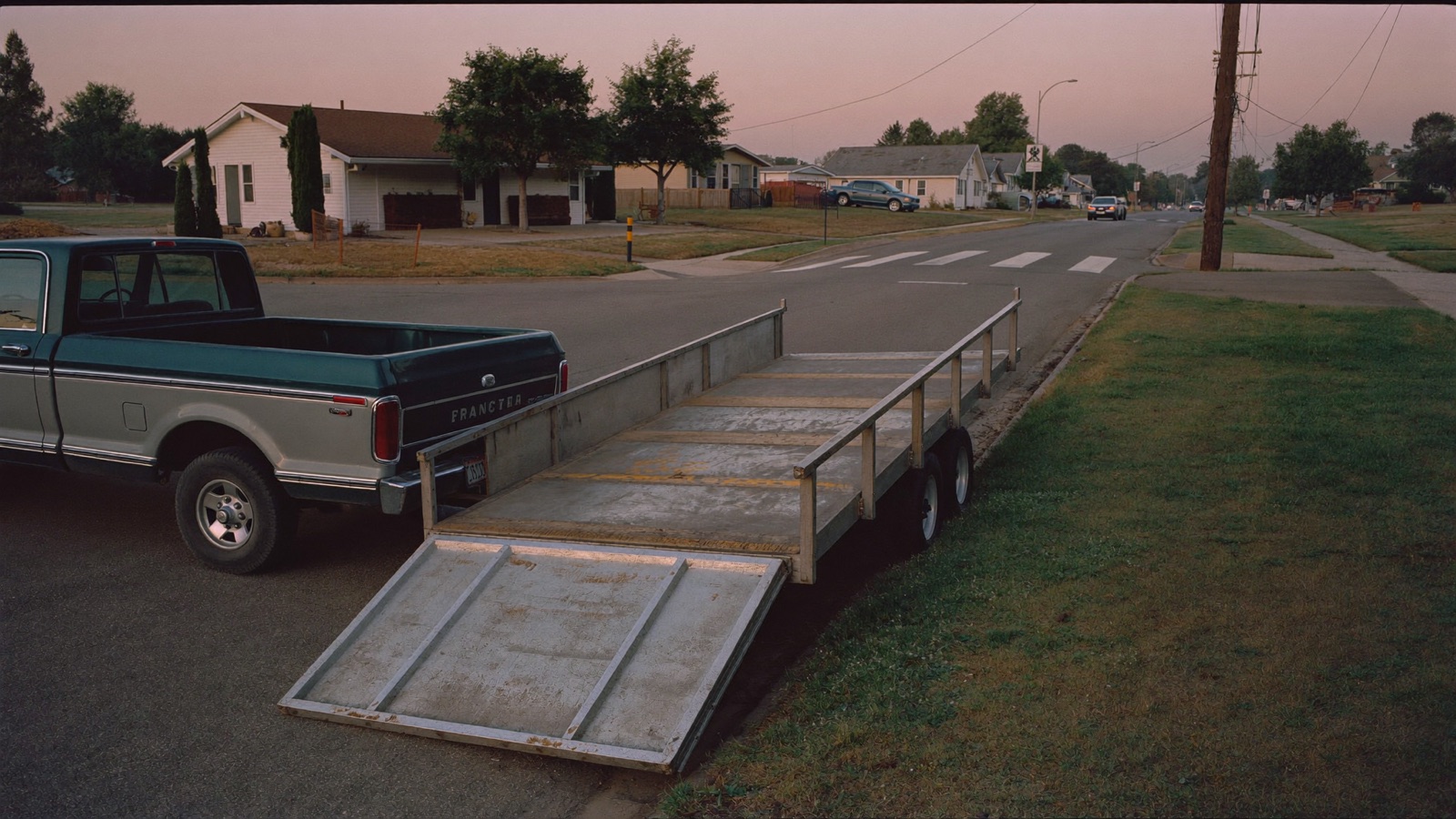
- Pickup plus a 6x12 utility trailer with plywood sidewalls
- Pickup plus a dump trailer
- A dump truck like an Isuzu NPR
Do not start with a dump truck or box truck unless you are sitting on serious capital. Big trucks force you into commercial auto insurance immediately, they are expensive to maintain, and one breakdown can eat a month of profit. The pickup and trailer setup keeps your overhead tiny while you learn the business. I wrote a full breakdown of the real startup numbers in how much it costs to start a junk removal business.
Step 2: The only equipment you need on day one
Forget the shopping spree. When I coach new operators on how to start a junk removal business, the day one gear list fits in one trip to Harbor Freight and Home Depot:
- Work gloves and boots
- A hand dolly (hand truck)
- A flat dolly
- Ratchet straps
- Contractor bags
- A couple of trash cans for loose debris
- A snow shovel (best tool ever invented for scooping mixed junk)
- A sledgehammer
Later, add a Sawzall. It pays for itself the first time you cut a hot tub, couch, or dresser into pieces instead of fighting it through a doorway. That is the whole list. Every dollar you do not spend on gear is a dollar you can spend on getting customers, and customers are the constraint, not equipment.
Step 3: Set up the business in one week
Do not spend three months designing a logo. Here is the boring setup, and all of it can be done in about a week:
- Register the business with your state.
- Get your EIN directly from the IRS website. It is free. Do not pay a filing service for it.
- Open a business bank account and set up card processing.
- Create your Google Business Profile immediately. It takes time to get verified and it becomes your single most valuable free asset.
- Put up a simple website. A few service pages and a phone number beat a perfect site that launches in month four.
- Get business shirts and a pricing binder so you look like a company, not a guy with a truck.
Two compliance items to check while you do this. First, licensing: most places do not require a special license to haul junk, but it varies by state, county, and city, so verify yours. I covered exactly how to check in my guide to junk removal licenses and permits. Second, insurance: get general liability from day one. Mine started around $35 a month. The full stack is in my post on junk removal insurance.
Step 4: Price junk removal jobs by volume
Junk removal pricing is volume based. You charge by how much space the junk takes up in your truck or trailer: quarter load, half load, three quarter load, full load. When I ran my company, a full load was $795, and each quarter load included about 30 minutes of labor.
Then you add fees for the stuff that makes a job harder:
| Situation | How to handle it |
|---|---|
| Stairs, long carries, high rises | Add a fee, quote it up front |
| Heavy material: concrete, gravel, dirt | Price by weight or bed load, not volume |
| Hazardous items, gun safes | Separate line item, always |
| Extra labor beyond included time | Bill additional time |
A few rules that saved me thousands. Never give a firm price over the phone from a description. Explain your minimum and your volume pricing, then offer a free, no pressure estimate on site. And know your trailer's real internal dimensions, because your entire pricing model depends on them. Run your setup through our free cubic yard calculator so you know exactly what a quarter load means in your rig.
If you want to see what customers actually pay across the industry, I published the real numbers in how much junk removal costs.
Step 5: Get your first 20 jobs without paid ads
My ramp went $200 a day, then $500 a day, then $1,000 a day, and none of the early jobs came from Google Ads. They came from pounding pavement. Here is the free playbook:
- Record a short video telling your contacts you started a junk removal business, and send it to everyone you know.
- Put out yard signs. Lots of them.
- Post constantly on Facebook Marketplace, local Facebook groups, Nextdoor, and Craigslist.
- Do daily walk-ins: storage facilities, real estate offices, property managers, apartment complexes.
- Set up an A-frame sign next to your truck while you work a job. Neighbors watch.
- Leave a branded yard sign at the customer's house in exchange for a small discount.
- Ask every single customer for a Google review on the spot.
Google Ads became the engine of my company eventually, but ads are an endgame channel. They need budget, landing pages, call handling, and tracking. Starting a junk removal business on ads alone is how beginners torch their savings. Earn the right to run ads with revenue first. I put the whole zero dollar playbook in 10 free ways to get junk removal jobs this week.
Step 6: Disposal is a profit center, not an errand
Beginners think everything goes to the landfill. Wrong, and expensive. Every item you divert is a dump fee you do not pay:
- Scrap metal goes to the scrap yard, and they pay you.
- Usable furniture and household goods go to donation centers.
- Good pieces get resold on Marketplace.
- Appliances go to appliance recyclers where available.
- Only the true junk goes to the landfill or transfer station.
Sorting loads became a habit on my crews and it directly widened our margins. Learn every landfill, transfer station, donation center, and scrap yard within 30 minutes of your service area before your first job, and note their prices and hours.
When to add software to your junk removal business
You can run your first handful of jobs from a notebook and your personal cell. That stops working fast. Missed calls become missed jobs, estimates get forgotten, invoices go out late, and nobody asks for the review. The businesses that scale are the ones that systematize early: every call answered or instantly texted back, every estimate followed up, every completed job triggering a review request.
When I started, that meant duct taping together a phone system, call tracking, a CRM, an email tool, and field service software, and paying for each one separately. That stack is exactly why I built Autopilot after selling my company: one app that runs the phones, texts, scheduling, estimates, invoices, and reviews for about what one of those tools costs alone. Software should be a rounding error, not a second rent payment.
I also filmed a full two hour masterclass covering everything in this post in more depth. It is free on YouTube: How to Start a Junk Removal Business and Make $100k to $250k Your First Year.
FAQ: starting a junk removal business
How much money do you need to start a junk removal business?
I started with about $4,000, and you can start with less. If you rent a truck per job day and buy only the basic gear, your real startup costs are registration, insurance, and marketing materials. The expensive stuff, like trailers and trucks, should be bought after demand is proven, not before.
Is junk removal a profitable business?
Yes, when it is run like a business. Solo operators commonly keep margins around 70% since costs are mostly gas and dump fees. At scale, with employees, ads, insurance, and office staff, my company ran about 25% net margins on $1M+ per year. The profit is real but it shrinks as you grow, so track your numbers from day one.
Do you need a license to start a junk removal business?
In most places there is no special junk hauling license, but requirements vary by state, county, and city, and some states are much stricter. You will still need normal business registration, and a USDOT number can apply once your truck and trailer cross certain weight thresholds. Check your local rules before you launch.
How much can one junk removal truck make?
A single truck can gross $20,000 to $30,000 a month in many markets, and up to $50,000 to $70,000 a month in a dense, expensive market like Los Angeles with strong utilization. Your market size, pricing, and marketing determine where you land in that range.
Can you start a junk removal business without a truck?
Yes. Book multiple jobs on the same day and rent a pickup from Home Depot or U-Haul. This is exactly how I recommend testing the business before you spend real money on a vehicle.
Get the boring stuff off your plate
Starting a junk removal business is a grind of calls, quotes, follow-ups, and reviews, and every one you drop is money in a competitor's pocket. Autopilot handles the phones, texts, booking, invoicing, and review requests so you can be on the truck making money. Start a free trial and see the pricing while you are at it. It costs less than one missed job a month.