Table of contents
- The real cost to start a junk removal business
- The truck: your biggest cost, and how to make it almost nothing
- My $9,000 dump trailer for $172 a month (with bad credit)
- Tools and gear: the cheapest line on the sheet
- Insurance, licenses, and paperwork line items
- Software: the only monthly costs worth paying
- What NOT to buy in year one
- Know your numbers from job one
- FAQ: junk removal startup costs
- Get the boring stuff off your plate
Ask the internet about the cost to start a junk removal business and you get two kinds of answers. Franchise sales pages that want $100,000 plus, and TikTok guys who say you can do it for free. Both are selling you something.
Here is my actual number: I started Jedi Junk Removal with about $4,000 during COVID, after my travel software startup died. That $4,000 turned into $1.1 million in gross revenue in 14 months, and I eventually sold the company. So the honest answer on junk removal startup costs is: a lot less than a franchise, a little more than zero, and the way you spend the first few thousand dollars matters more than the amount.
This post breaks down every line item, with the real prices I paid, including the $9,000 dump trailer I financed for $172 a month with a credit score around 600.
The real cost to start a junk removal business
If you are keeping score, here is where the money actually goes in the first 90 days:
| Line item | What I actually did | Real cost |
|---|---|---|
| Truck | Rented per job day, then used my pickup | Near zero up front |
| Dump trailer (later) | Financed through Rock Solid Funding | $800 down, $172/mo |
| General liability insurance | Started with a cheap starter policy | About $35/mo |
| Business registration + EIN | EIN is free direct from the IRS | State filing fee only |
| DOT compliance (if required) | Filed DOT, CA number, motor carrier permit | A few hundred dollars |
| Software | One app instead of a five-tool stack | About $50/mo |
Notice what is missing: a $60,000 truck, a $15,000 website, a $5,000 course. None of that belongs in year one. I walked through the whole launch sequence step by step in my guide to starting a junk removal business.
The truck: your biggest cost, and how to make it almost nothing
The vehicle is where beginners blow up their budget, and it is the most avoidable mistake in the industry. You do not buy a truck to test a business. You book two or three jobs on the same day, rent a pickup from Home Depot or U-Haul, and stack them. The jobs pay for the rental with money left over, and you just proved demand with someone else's truck.
When you are ready to own, the ladder looks like this: used pickup, then pickup plus utility trailer, then dump trailer, then a real dump truck. Every rung up adds capacity and also adds insurance, maintenance, and risk, so climb only when the schedule is full. Skipping rungs is how people end up with a box truck payment and three jobs a week. I compared every setup in detail in the best truck for junk removal.
My $9,000 dump trailer for $172 a month (with bad credit)
The single best equipment purchase I made was a dump trailer, and the way I bought it is the point of this section.
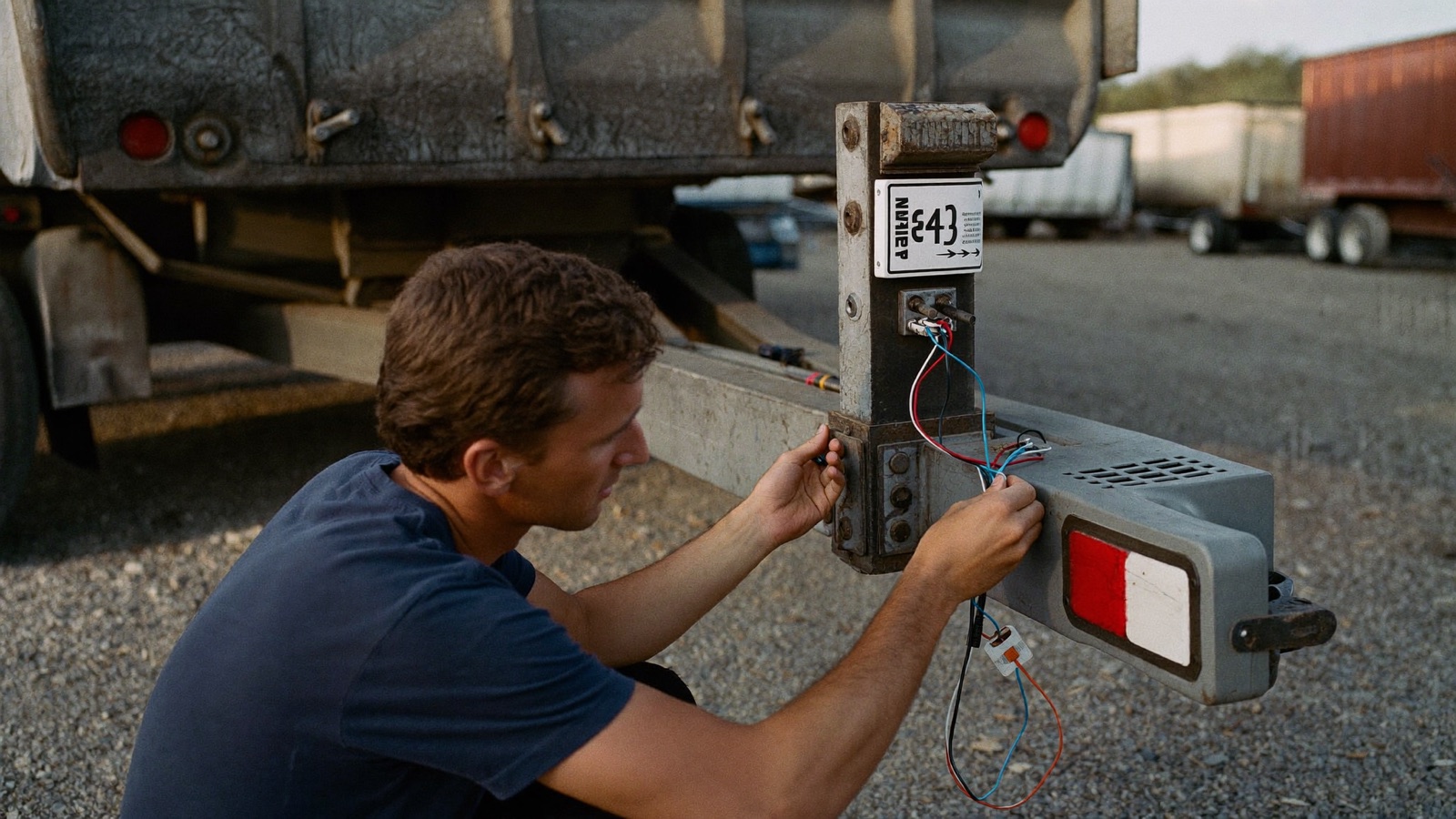
The package came out to roughly $8,500 after tax, a toolbox, and a wheelbarrow ramp. I put about $800 down and financed the rest through Rock Solid Funding at around 18% interest, with a credit score near 600. Payment: $172 a month. Yes, the interest rate was ugly. I paid my first two trailers off within a year anyway.
Why finance instead of saving up and paying cash? Because cash is your growth fuel. Every dollar locked up in a trailer is a dollar not spent on yard signs, Facebook ads, and Google ads, and those are what fill the schedule. Here is the labor math that justified the payment: hand-unloading a regular utility trailer takes about 30 minutes a day. At employee wages, five days a week, that is roughly $170 a month in paid unloading time. The dump trailer erased it. The trailer payment paid for itself before marketing gains even entered the picture.
Two buying tips. Skip the $12,000 to $15,000 premium brands early; local dealers, Craigslist, Facebook Marketplace, and regional manufacturers sell solid trailers for much less. And verify the internal dimensions with a tape measure, because advertised sizes often describe the outside or the wheelbase. Mine was narrower inside than I thought for months, and your whole pricing model sits on those cubic yards. I told the full story of the trailer deal in a video: How I Bought a $9,000 Dump Trailer for $172/mo With Bad Credit.
Tools and gear: the cheapest line on the sheet
The day one equipment list is short: gloves, boots, a hand dolly, a flat dolly, ratchet straps, contractor bags, and a couple of trash cans. Add a snow shovel for scooping mixed debris and a sledgehammer for breakdowns. One trip to the hardware store covers it. A Sawzall joins the list once you hit your first hot tub.
What beginners actually overspend on is image: embroidered jackets, custom wraps, fancy uniforms. You need branded shirts and decals on the trailer so you look legitimate on a driveway, and decals beat magnets because they signal you are a real company, not a side hustle. That is it. Spend the difference on marketing.
Insurance, licenses, and paperwork line items
The compliance costs are real but smaller than people fear:
- General liability insurance. Get this before your first job. Starter policies for a new junk removal business run roughly $20 to $200 a month, and I paid about $35 a month when I started.
- Business registration and EIN. Your state charges a filing fee. The EIN is free directly from the IRS website, so never pay a service for it.
- DOT numbers and permits. Depending on your state and your truck and trailer weight, you may need a USDOT number and state permits. In California I filed a DOT number, a CA number, and a motor carrier permit. Annoying forms, a few hundred dollars, done.
- Workers comp. Not a startup cost if you are solo, but the moment you hire a W2 employee it lands, and in my experience it ran about 10% of payroll. Budget for it before you hire, not after. My post on junk removal insurance covers the whole stack and what skipping it cost me.
Software: the only monthly costs worth paying
My software philosophy after running this business and selling it: pay for exactly three things.
First, education, which should be free. There is a free junk removal community and course at Junk Support with several hundred members and a full startup curriculum. Do not pay thousands of dollars for a guru course that teaches you to put out yard signs.
Second, a system that runs your operations: phones, texting, scheduling, estimates, invoices, and review requests. When I started I had to stack a phone app, call tracking, a CRM, an email tool, and field service software, each with its own bill. That mess is why I built Autopilot, which does the whole job for about $50 a month. Check the pricing and compare it to any stack of point tools.
Third, once you are established, some kind of outbound engine for commercial leads, because residential junk removal customers do not repeat often and you need a way to go get business instead of waiting for it.
What NOT to buy in year one
This list saved more operators than any purchase ever will:
- A dump truck or box truck. Commercial auto insurance hits immediately and can run multiples of a personal policy. Earn your way there.
- A premium trailer brand. The junk does not care.
- A custom $10,000 website. A simple site with service pages and a phone number closes jobs fine.
- A logo project that takes six weeks. Pick something clean and go.
- Guru courses that cost thousands. The information is free on YouTube. I know because I put most of it there.
- New equipment for hypothetical job types. Buy the Sawzall when you book the hot tub.
Every one of these purchases feels like progress and delays the only thing that matters: booked jobs.
Know your numbers from job one
Here is the part almost everyone skips. Startup cost is one number; operating cost is a number you live with forever. Dump fees, fuel, labor, and insurance eat gross revenue fast, and operators who do not track cost of goods sold wake up one day grossing $30,000 a month and keeping almost none of it. Run your real numbers through our free COGS calculator before you set prices, not after.
And if you want to see what the money actually looks like on the other side of the grind, I broke down real owner income tiers in how much junk removal business owners actually make.
FAQ: junk removal startup costs
How much does it cost to start a junk removal business?
I started with about $4,000 all-in, and that included early marketing. If you rent trucks per job day and buy only basic gear, you can start for well under that. The franchise route costs many times more and buys you a brand, not customers.
Can you start a junk removal business with no money?
Close to it. Book multiple jobs for one day, rent a pickup from Home Depot or U-Haul, and let the first job pay for the truck. Your real minimum spend is business registration, a starter general liability policy, and gloves and dollies.
Should I finance equipment or pay cash?
I financed, even at 18% interest with bad credit, and I would do it again. The $172 monthly trailer payment was covered by labor savings alone, and the cash I kept went into marketing that filled the schedule. Debt on income-producing equipment is a different animal than consumer debt.
What is the biggest hidden cost in junk removal?
Dump fees, and the insurance that stacks up as you grow. Solo with a pickup you keep most of what you make. Add a W2 employee and workers comp takes roughly 10% of payroll, commercial auto enters, and margins tighten. Price your jobs with those costs in mind from the beginning.
Get the boring stuff off your plate
You can start this business for a few thousand dollars, but only if every dollar works. Autopilot gives you the phones, texts, booking, estimates, invoices, and reviews in one app for less than your fuel bill. Start a free trial and keep your startup budget where it belongs: on getting customers. Full plans are on the pricing page.