
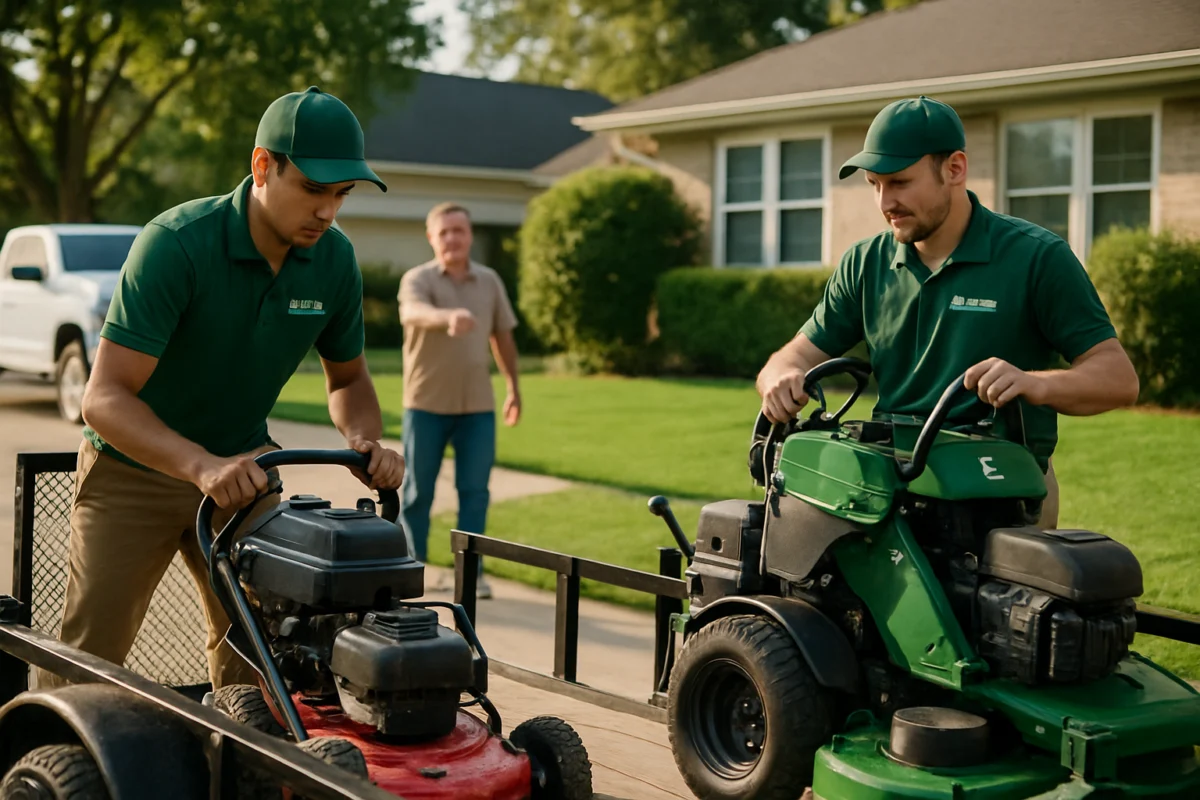
If you are new to lawn care or tired of undercutting yourself, this guide walks you through a repeatable pricing system you can use today. No fluff. No theoretical models. Just a simple method to cover costs, make steady profit, close more jobs, and scale up without burning out.
Why pricing your lawn care jobs the right way matters
Price too low and you work yourself into the ground for little or no profit. Price too high without communicating value and you lose customers to cheaper competitors. The right price protects your time, improves customer satisfaction, and gives you cash to invest in growth.
Pricing affects everything. It determines who calls you, the types of customers you keep, how fast you can hire, and whether you can buy better equipment. Treat pricing as an operating system, not a guess.
Overview of the step-by-step pricing system
This is a simple four-step system I use with crews: 1) calculate true cost per hour and per job, 2) choose a pricing model that fits the job, 3) build price ranges and a quick quote sheet, and 4) test, track, and adjust.
Follow these steps and you will stop losing money on work that looks easy on paper. I include sample numbers and scripts you can copy into your phone or CRM.
Step 1: Calculate your true costs
Most beginners only think about gas and a lawn mower. Real pricing starts with an accurate cost breakdown. Do this first and prices stop feeling arbitrary.
Direct costs
Direct costs are the things that happen when you do a job. Track them for a month to get real numbers.
- Fuel and oil. Record miles driven and gallons used.
- Equipment wear and tear. Estimate a per-hour cost for mowers, trimmers, blowers. If a mower costs 2,500 and lasts 1,000 hours, that is 2.50 per hour in depreciation.
- Materials. Fertilizer, seed, weed killer, mulch. Add them per job.
- Labor. Your hourly pay for you and any crew members on the job.
Overhead
Overhead keeps the lights on but does not belong to any single job. Spread this across your jobs to find the hidden cost.
- Truck payments and insurance.
- Office phone, software subscriptions, website, advertising.
- Licenses, permits, bank fees, accounting.
Divide monthly overhead by the number of billable hours you expect. For example, if overhead is 2,000 per month and you estimate 250 billable hours, overhead per hour is 8.00.
Profit target
Decide your profit margin on top of costs. A healthy starting target is 20 to 30 percent margin. When you are early and reinvesting, 15 to 20 percent is acceptable. Too many operators forget profit and blame the market later.
Quick cost example
Example for a one-person crew. These are rounded numbers to show the math.
- Labor: 25 per hour (your pay).
- Fuel/equipment: 8 per hour.
- Overhead allocation: 7 per hour.
- Total cost per hour: 40 per hour.
- Add 25 percent profit: 50 per hour final threshold.
That 50 per hour is the bare minimum you need to hit your profit goal. If you accept jobs paying less, plan on losing money or cut costs first.
Step 2: Choose the right pricing model for each job
Pick a pricing model that is fair to you and easy for customers to understand. Common models in lawn care are per-cut flat rate, square-foot pricing, and hourly. Each has pros and cons.
Per-cut flat rate
Best for recurring residential mows where you can predict time. You quote a single price per visit. Customers like certainty and you benefit from efficient workflows.
Use this when yards are similar in size and access, and when you have regular routes. Calculate it by estimating time and applying your hourly threshold plus a buffer for tight gates or extra trimming.
Square-foot pricing
Use square-foot pricing for variable yards where time scales with size, like commercial properties or irregular lots. Create tiers, for example under 5,000 sq ft, 5,000 to 10,000 sq ft, over 10,000 sq ft.
Square-foot works well when you can quickly estimate size or use public parcel maps. It reduces surprises on larger properties.
Hourly pricing
Use hourly on odd jobs, new customers, or heavy cleanup work. Hourly is fair when scope is uncertain, like post-construction or storm cleanup.
If you charge hourly, always give a time estimate and a maximum. Track minutes to make sure your hourly rate covers travel, setup, and teardown.
Add-ons and upsells
Some services should be priced separately. Mulching, edging, weed control, hedge trimming, and hauling removed debris are examples. Keep a price list for common add-ons so techs can upsell on site without calling you.
Step 3: Build a quick quote sheet and price ranges
Create a one-page quote sheet for your phone or CRM. It should have the common yard sizes, the time you expect, and the recommended price. Use ranges not single numbers to allow flexibility.
Sample quick quote sheet
- Small yard (under 5,000 sq ft): 30 to 45 per cut, estimated 30 to 45 minutes.
- Medium yard (5,000 to 10,000 sq ft): 50 to 80 per cut, estimated 1 to 1.5 hours.
- Large yard (10,000 to 20,000 sq ft): 90 to 160 per cut, estimated 2 to 3 hours.
- Overgrown or first-time clean up: price on site after inspection or add 50 to 100 percent to normal price.
These are examples. Replace with your actual numbers after you calculate costs. Use the sheet to quote quickly and stay consistent across techs.
Step 4: Test, track, and adjust
Price is not set and forget. Track actual time and costs for every job for at least 60 days. Compare actual profit to your target. If a type of job consistently underperforms, raise the price or stop doing it.
Testing helps you identify which jobs are worth bidding on. For example, properties with lots of debris or tight parking can cost double the expected time. Either price them higher or avoid them.
Common pricing mistakes and how to avoid them
Beginners fall into patterns that kill margins. Spot these early.
- Charging the same flat price for all yards. Yards differ. One price fits none.
- Not charging for travel time. If you drive 30 minutes to a job, that time costs you money.
- Ignoring junk in yards. Debris increases time and machine wear. Add a debris fee or inspect first.
- Giving long discounts for the wrong customer. Missed payments and flaky customers cost more than the discount saves.
- Not updating prices with inflation. Fuel, parts, and insurance rise. Update prices annually at minimum.
How to raise prices without losing customers
Raising prices is necessary. Do it the right way and most customers will stay. Here is a simple approach.
- Communicate value. Explain improved equipment, better materials, trained crew, or more reliable scheduling.
- Offer notice. Tell customers prices change on a future date. Many accept a 30 to 60 day notice.
- Bundle for savings. Offer a small discount for prepaid seasonal plans. That keeps revenue predictable.
- Grandfather long-term customers at a smaller increase. This keeps loyalty while improving margins overall.
Scripts: How to quote over the phone and close more jobs
When a lead calls, you have minutes to make a good impression. Keep scripts short and confident. Use this framework.
Phone quote script
Hello, this is Sam at GreenLine Lawn Care. I can do that. Can I ask a couple quick questions to get you an accurate price? Great. How big is the yard in approximate feet or description? Are there any gates, dogs, or heavy debris? Do you want mowing only or edging and blowing too? Thanks. Based on that, I can book you for a first-time clean up on Saturday for X, or a regular cut at Y every two weeks.
Keep the script natural. If the scope is unclear, offer a short drive-by estimate or a photo estimate via text. Use photos to avoid surprises.
Price examples for common lawn jobs
These are example price bands operators use. Adjust for your market and costs.
- Weekly mow on small yard: 30 to 50
- Biweekly mow on medium yard: 60 to 90
- Large property commercial mow: 150 to 400
- First-time clean up or overgrown: 150 to 500 depending on size and debris
- Edging and blowing as add-on: 10 to 30
- Mulch per yard: 50 to 150 plus material cost
Software and tools to simplify pricing
You can run pricing from a notebook. The right software makes it faster and reduces errors. Here are options and how they fit small operators.
Jobber
Jobber is popular with small to mid-size crews. It has estimating, invoicing, scheduling, and client management. It is easy to set up. The quoting tools are good for recurring pricing and packages.
Housecall Pro
Housecall Pro has strong automation for quotes and text confirmations. If you want to automate reminders and payments, it is a solid choice. It can be pricier as you scale.
Workiz
Workiz is good for dispatch-heavy operations. It has job costing features you can use to track actual time and margins. This helps with step 4 testing and tracking.
ServiceTitan
ServiceTitan is built for larger field service companies. It has deep reporting and pricing controls. For beginners it can be overkill and expensive. Consider it when you are scaling past multiple trucks and crews.
How to scale revenue using pricing strategy
Pricing helps you scale because it determines the types of customers you attract. Higher prices bring more reliable customers and allow you to hire dependable crews. Here is a simple growth path.
- Standardize pricing for recurring residential work and lock in routes. Routes reduce travel time, increasing profit per hour.
- Create a premium tier for higher quality or bundled services. Charge 25 to 50 percent more for premium clients who want guaranteed windows and communication.
- Use commercial accounts to stabilize revenue over slow seasons. Commercial clients pay more and book regular contracts.
- Reinvest a percentage of profits into marketing and equipment. Better equipment increases efficiency and allows you to keep higher prices.
Measuring success: KPIs to watch
Keep the following indicators front and center so pricing decisions are data driven.
- Average ticket value. Track by service type and by customer type.
- Labor hours per job. Know the real time it takes your crew to complete work.
- Gross margin per job. Revenue minus direct costs divided by revenue.
- Customer retention. Recurring customers lower your acquisition cost.
- Lead-to-booking ratio. Are your prices scaring off leads or do you have a sales problem?
Real talk: When to walk away from a job
Not every lead is worth taking. If a job has unclear access, dogs that will not be contained, excessive trash, or a customer who negotiates every invoice, you can politely decline. Saying no protects your margins and morale.
Missed calls, no follow-up systems, juggling too many tools, and disorganization are common pain points that make pricing harder. You can calculate the perfect prices, but if leads slip through, or techs are double-booked, revenue will stall. Autopilot solves those operational holes. It combines scheduling, dispatching, invoicing, call handling, texting, and marketing in one platform. That removes the patchwork of apps, gives you clear job data, and helps you book more jobs without guessing. Try a platform that reduces admin work so you can stick to pricing that grows your business and hire a team that follows it consistently.