
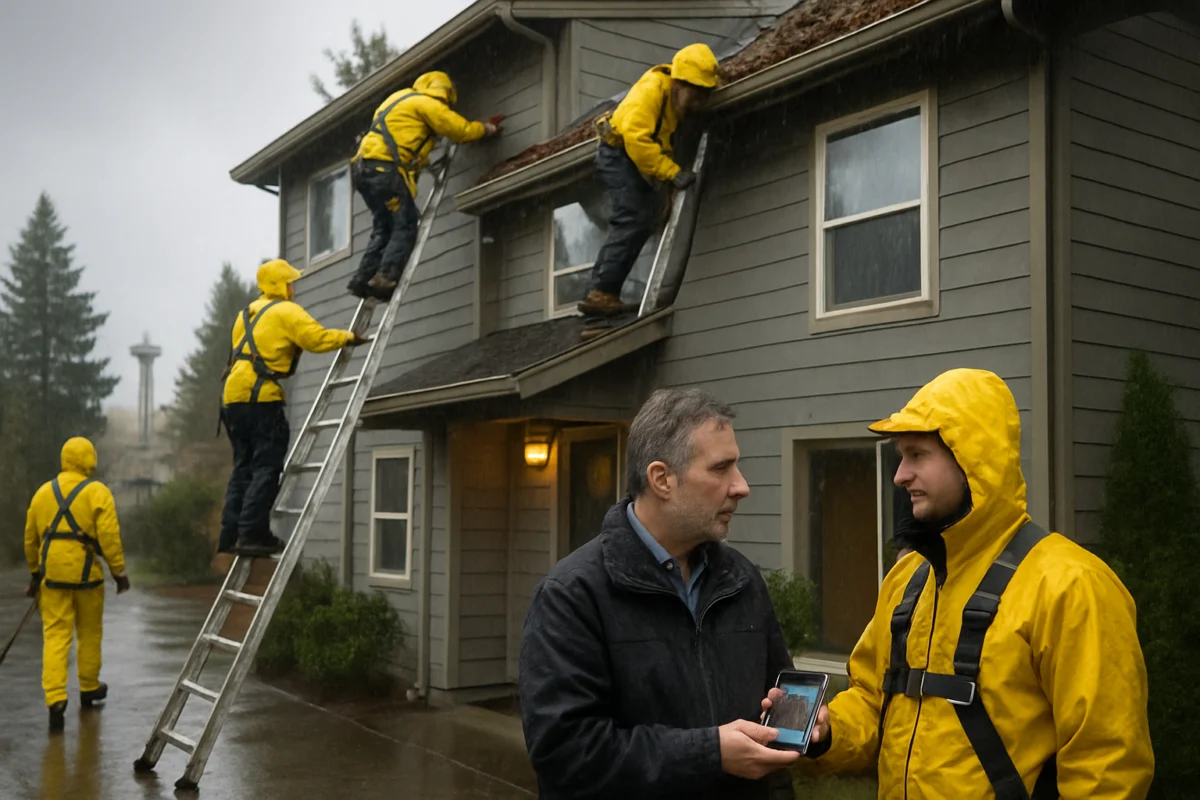
Selected Industry: Gutter cleaning
Selected Content Type: Troubleshooting
Selected Keyword Angle: Same-day emergency gutter cleaning for Seattle landlords managing 3+ unit buildings during heavy fall rains
Selected Audience Stage: Intermediate
Meta Description: Step-by-step operations and troubleshooting for booking and executing same-day emergency gutter cleaning for Seattle landlords of multi-family buildings.
If you run a gutter cleaning crew that works on multi-family buildings in Seattle, the fall storm season is where your calendar fills up and your phone rings off the hook. Same-day emergency calls from landlords managing three unit and larger properties are stressful and profitable. They also expose weak systems. This post focuses on how to reliably take, triage, price, dispatch, and finish same-day emergency gutter jobs for Seattle landlords without scrambling your crew or sacrificing safety.
Why same-day emergency gutter jobs for Seattle landlords are a different animal
Seattle storms bring continuous rain, falling leaves, and rapid clogs. Landlords of 3+ unit buildings call when water overflows and basement units flood, when ice starts to form in gutters, or when tenants report leaks. These are high-stakes calls. The landlord wants a fast solution and proof that the problem is solved. They often need work cleared for tenants, insurance reasons, or to avoid mold claims.
The real pain points
Landlords expect availability, quick arrival, documentation, and minimal disruption to tenants. You face limited daylight during fall, slippery roofs, narrow alley access on city lots, permit or HOA rules, and potential tenant scheduling. Missing calls, slow dispatch, and poor follow-up are the top reasons operators lose repeat landlord contracts.
Quick checklist: What to have ready for same-day emergency calls
- Dedicated intake script for landlords. Keep it short and transactional.
- On-call crew roster with a confirmed driver and at least two technicians.
- Emergency pricing template with flat fees by building height and unit count.
- Standard waiver and tenant access authorization form.
- Mobile photo and video checklist for before and after documentation.
- Basic parts and repair kit for minor downspout fixes and hangers.
- High-visibility rain gear and non-slip footwear for crews.
- Insurance and certificate of insurance template for quick emailing.
Step-by-step flow for intake to completion
1. Intake: turn panic into a job you can actually deliver
When a landlord calls, you have two goals. First, calm them down. Second, gather the facts that predict complexity. Use a short script. Ask building address, number of units, whether water is actively overflowing, any tenant injuries, the building height, and if they can provide photos. If they identify as a property manager or landlord, note it. That label means repeat business if you solve this well.
Example intake script lines to use: “Are any areas actively flooding now?” “How many stories is the building?” “Do you have tenant access permission or should we contact them?” Keep it under five questions. Landlords want fast answers, not interrogation.
2. Triage: green, yellow, red
Classify the job quickly.
- Green. Overflow but no interior water. Can be handled during business hours with single crew.
- Yellow. Overflow affecting exterior walkways, tenant inconvenience, minor roof damage. Send two techs within a 3 hour window.
- Red. Active interior flooding, structural risk, or tenant safety issues. Dispatch immediately with full crew, and advise landlord to shut off utilities where appropriate.
3. Pricing same-day emergency gutter jobs for landlords
Same-day emergency fees should reflect urgency, travel time, and building complexity. Use a base emergency dispatch fee plus per-story charge and a per-hour labor rate. Always include a materials buffer. For Seattle multi-family jobs consider these simple rules of thumb for quoting a landlord on the phone.
- Emergency dispatch fee. This covers the disruption of re-routing crews. It also discourages frivolous calls.
- Height multiplier. Buildings 3 stories and up require different ladders, harnesses, or a boom lift. Add a clear line item.
- Unit count modifier. More units mean more roof length and leaf volume. Charge accordingly.
- Flat result guarantee. Offer a short window guarantee for clearing visible blockages and documenting flow.
Example phone quote: “Emergency dispatch $150, plus $120 per hour for two techs. For a three-story, add a $200 height surcharge. We can be there in two hours.” Be transparent. Landlords respect honesty and clarity.
4. Dispatch: get a crew there fast and safe
Assign a clear leader on the crew. For multi-family emergency jobs, send at least two techs to handle ladders, roof work, and tenant interactions. Use a map with traffic-aware ETAs. Confirm access details like alley gates, side doors, or tenant contact numbers. If the building requires HOA or street permits for ladder placement, have that info during dispatch.
5. On-site protocol and tenant handling
Introduce your team to the landlord or tenant, show your insurance if asked, and get a signed access form. Safety first. Use fall protection for anyone on roofs above two stories. Avoid entering units unless requested and authorized by the landlord. Always record the start time, take a short video of problem areas, and capture before photos. This protects you and helps with invoices or disputes.
6. Work sequence for rapid results
- Clear major downspout blockages first, so water has somewhere to go.
- Use compressed air or water flushing from the roof down to confirm flow.
- Remove heavy debris and check anchors and hangers.
- Repair or replace broken hangers or downspout brackets if it is a minor fix.
- Take after photos and a short video showing water flow off the roof into downspouts.
7. Documentation and landlord handoff
Send the landlord a single email with before and after photos, a short work summary, a copy of your invoice, and a link to your certificate of insurance. If you found damage or recommended larger repairs, provide a separate estimate. For landlords, this bundle is gold. It shows professionalism and reduces friction for payment and repeat work.
Common troubleshooting scenarios and how to fix them
Downspout is clogged at the base causing overflow
Symptoms. Water pours over the gutter edge and pools near the foundation. Often only the bottom elbow is clogged with leaves, rocks, or small trash. Solution. Try a hand auger or a plumber’s snake through the outlet. If the clog is in an exterior underground run, recommend CCTV inspection and coordinate with the landlord for a scheduled repair.
Gutters are full of wet, compacted leaf matter that will not easily scoop out
Symptoms. Heavy, wet debris that slows your pace and raises risk of crew fatigue. Solution. Use a wet-vac and leaf blower combo, or bring a second crew member with a powered scooper. For very wet clumps, prying and cutting with a grab tool works better than scooping. Charge for the extra labor upfront if you anticipate this scenario.
Access is tight, and ladder placement is hazardous
Symptoms. Narrow alleys, parked cars, or landscaping block ladder access. Solution. Assess alternative access like roof hatch, neighboring building permission, or using an extendable pole system from ground level. If none of those are safe, inform the landlord that boom lifts or hoists are required and provide an estimate. Never compromise safety to meet the same-day timeline.
Pricing templates and quick math for operators
Keep these pricing building blocks in your operations manual. Adjust for Seattle market rates and your cost structure.
- Emergency dispatch: $100 to $250 depending on distance
- Two-technician hourly rate: $100 to $180 per hour total
- Three-story surcharge: $150 to $350
- Material/parts buffer: 10 to 20 percent of the labor estimate
- Minimum same-day job: one to two hours minimum billed
This is a template. Fill it with your real costs. When quoting landlords, show a clear line item for emergency fees so they understand the premium for speed.
Safety and legal must-dos for Seattle multi-family jobs
Washington state rules, local building codes, and landlord-tenant laws can all influence the job. Maintain active general liability and workers compensation. Carry a COI that names a property manager or landlord when requested for recurring accounts. Post-fall inspections and hazard photos are useful evidence if a claim arises. If you must access tenant units, get explicit written permission from the landlord and document it with photos and timestamps.
Operations tips for scaling same-day emergency capacity
Build an on-call rotation
Rotate crews so you do not burn out your best techs. Maintain a minimum redundancy of a driver plus two technicians. On-call pay stashes can keep crews willing to accept emergency shifts without resentment.
Create a landlord account program
Offer landlords a priority lane for a monthly or annual fee. The program can include priority scheduling, discounted emergency rates, and automatic seasonal cleanings. This stabilizes revenue and reduces ad-hoc same-day pressure while keeping top-of-list access for landlord clients.
Tools and inventory to prioritize
- Two heavy-duty ladders with stabilizers for 3-story access
- Wet/dry vac with gutter attachments
- Leaf blowers and pruners for debris removal
- Lightweight roofing harness and fall protection gear
- Mobile payment and invoicing device
- Camera or smartphone with stable video for documentation
Use templates to speed admin
Have email templates for confirmation, invoicing, COI sending, and follow-up. Use text message confirmations with ETA. Landlords are busy, so keep communication concise and professional.
How to market same-day emergency services to landlords in Seattle
Focus on channels landlords use. Property managers, local realtors, and landlord associations are better targets than general consumer ads. Build referral partnerships with facility managers, plumbing companies, and mold remediation firms. Offer short training sessions to property managers on how to spot gutter risk. They will remember you when a tenant calls in a crisis.
Local SEO pointers
Optimize for long-tail phrases the landlord will use. Examples: “Seattle emergency gutter cleaning multi-family” and “same-day gutters 3-story Seattle landlord.” Create local landing pages for neighborhoods with high multi-family density. Include case studies of past landlord clients, before and after photos, and clear call to action for priority scheduling.
Tools and software that help handle same-day volume
Scheduling and dispatch software will be the difference between chaotic handling and a smooth operation. Jobber, Housecall Pro, Workiz, and ServiceTitan are solid tools for scheduling and invoicing. Each has pros and cons. Pick one that integrates with your texting and payment stack. The goal is to minimize manual steps between a call and a dispatched crew.
What to look for in software
- Fast job creation from a text or call
- Real-time crew location and ETA
- Easy invoicing and COI sending
- Customer notes and property history visible on intake
- Simple recurring job management for landlord accounts
Handling sticky situations
When a landlord refuses payment after an emergency
Provide clear documentation and a concise invoice. Show before and after photos and a short work note. Offer a payment plan if needed, but do not accept ambiguous promises. For repeat clients, you might apply account credit policies. If you need to escalate, send a certified letter and keep detailed records.
When you find bigger problems
If you discover rot, loose fascia, or a detached downspout that requires major repair, separate the emergency clearing from the repair quote. Document everything. Offer a follow-up estimate and indicate urgency. Landlords often prefer immediate mitigation followed by scheduled repairs to avoid tenant disruption.
A sample same-day SOP checklist for techs (printable)
Before leaving base
- Confirm call details, address, and landlord contact
- Pack safety gear, ladders, wet-vac, blower, basic parts
- Load COI and invoice templates on tablet
On arrival
- Introduce team, show ID and COI
- Get access authorization signed or confirm verbal permission on recorded call
- Take before photos and short video
During work
- Follow safety protocols, use harness above two stories
- Clear downspout first, then scooping and flushing
- Log start and end times and materials used
After work
- Take after photos with water flow visible
- Fill out short work note and email to landlord
- Collect payment or note billing terms
Measuring success and iterating
Track these KPIs for your emergency program. Average response time, first-time resolution rate, invoice collection rate, and landlord retention. If response time slips, look at dispatching or crew fatigue. If retention is low, examine communication and documentation. Small operational tweaks yield large trust gains with landlord customers.
Same-day emergency gutter service for Seattle landlords of 3+ unit buildings demands precise intake, robust safety, transparent pricing, and fast documentation. When you systemize the triage and dispatch flow, you cut down wasted trips, raise margins, and build steady landlord accounts. Missed calls, poor follow-up, too many tools, and disorganization are common pain points that resurface when teams scale. A single platform that centralizes scheduling, dispatch, invoicing, calls, texting, and marketing can reduce tool overload and help you book more jobs and keep landlord clients happy. Autopilot, at www.autopilotapp.io, is an all-in-one platform that does just this. It helps consolidate your workflows so you do not chase missed calls or lose track of follow-up. Consider testing a unified system to replace scattered apps and simplify same-day operations.