Table of contents
- Where to Find Junk Removal Employees
- The Interview Funnel That Predicts Show-Up Rate
- The Paid Training Day: Let the Truck Decide
- Before You Hand Anyone the Keys
- How My Operations Manager Stole $10,000 From Me
- The Controls That Would Have Caught It
- Managing and Firing: Culture on a Small Fleet
- FAQ: Hiring Junk Removal Employees
- Get the boring stuff off your plate
My operations manager stole about $10,000 from me. A cash box, a MacBook, an iPhone, company credit cards, power tools he never returned. Roughly $1,600 of it was card charges at places like Amazon, Dick's Sporting Goods, and the grocery store. I called the police, filed for a restraining order that got denied, and took him to small claims court for the California maximum of $10,000.
I'm telling you that up front because every article about hiring junk removal employees starts with job boards and ends with a smiley handshake photo. Nobody talks about what happens when it goes wrong. I built a junk removal company that grossed over $1M in its first year, and I'll say it plainly: employees were the hardest part of the whole business, second only to Google Ads.
So this is the full picture on hiring junk removal employees. Where I actually found crews, the interview that predicts whether someone shows up, how training day works, and the controls that would have saved me ten grand.
Where to Find Junk Removal Employees
I hired almost everyone from two places: Craigslist and ZipRecruiter.
A Craigslist job post cost me about $45, and the best responses came in the first few days. It sounds old school, but the people who haul junk are on Craigslist. ZipRecruiter ran me around $16 per day, and the part I liked is you can toggle it off the moment you've hired. Indeed works too, but at my stage it was too expensive for what it returned.
The post itself should be honest. This is labor. You're lifting couches, you're driving between jobs, some days are long. But there are tips, there are treasure finds in people's garages, and a good crew member on a busy truck earns real money. I watched my two-man crew pull $181.50 in tips on a single $1,805 day. Sugarcoating the job just gets you day-one quitters.
I made a full video walking through my hiring process, including a real recorded interview with an applicant, here: https://www.youtube.com/watch?v=IxGWkUjG5b8
The Interview Funnel That Predicts Show-Up Rate
Here's the mistake most owners make: they text back and forth with every applicant, schedule in-person interviews all over the week, and then half the candidates ghost them. You just burned your schedule for nothing.
My fix was simple. Every single applicant gets the same Calendly link for a 15 minute video interview on Google Meet or Zoom. No exceptions, no phone tag.
Two things happen automatically:
- The flakes filter themselves out. If someone can't book a 15 minute video call, they were never going to show up at 7 a.m. with gloves on.
- Your day stays intact. I set my Calendly availability to specific morning blocks so interviews stack back to back instead of shredding my whole week.
On the call, I asked the same questions every time:
- How's your driving record?
- Can you start early? Junk removal mornings start before most people's alarms.
- Do you have your own reliable vehicle to get to the yard?
- Have you done physical labor before? What kind?
- Are you okay with long days when the schedule stacks up?
- Do you want to be a driver or a helper?
- Can you talk to customers? Would you be comfortable walking a homeowner through their quote?
- Can you spend all day in a truck cab with one teammate without drama?
None of these are trick questions. You're screening for personality and reliability, because you can teach anyone to lift a couch with their legs. You cannot teach someone to answer their alarm.
The Paid Training Day: Let the Truck Decide
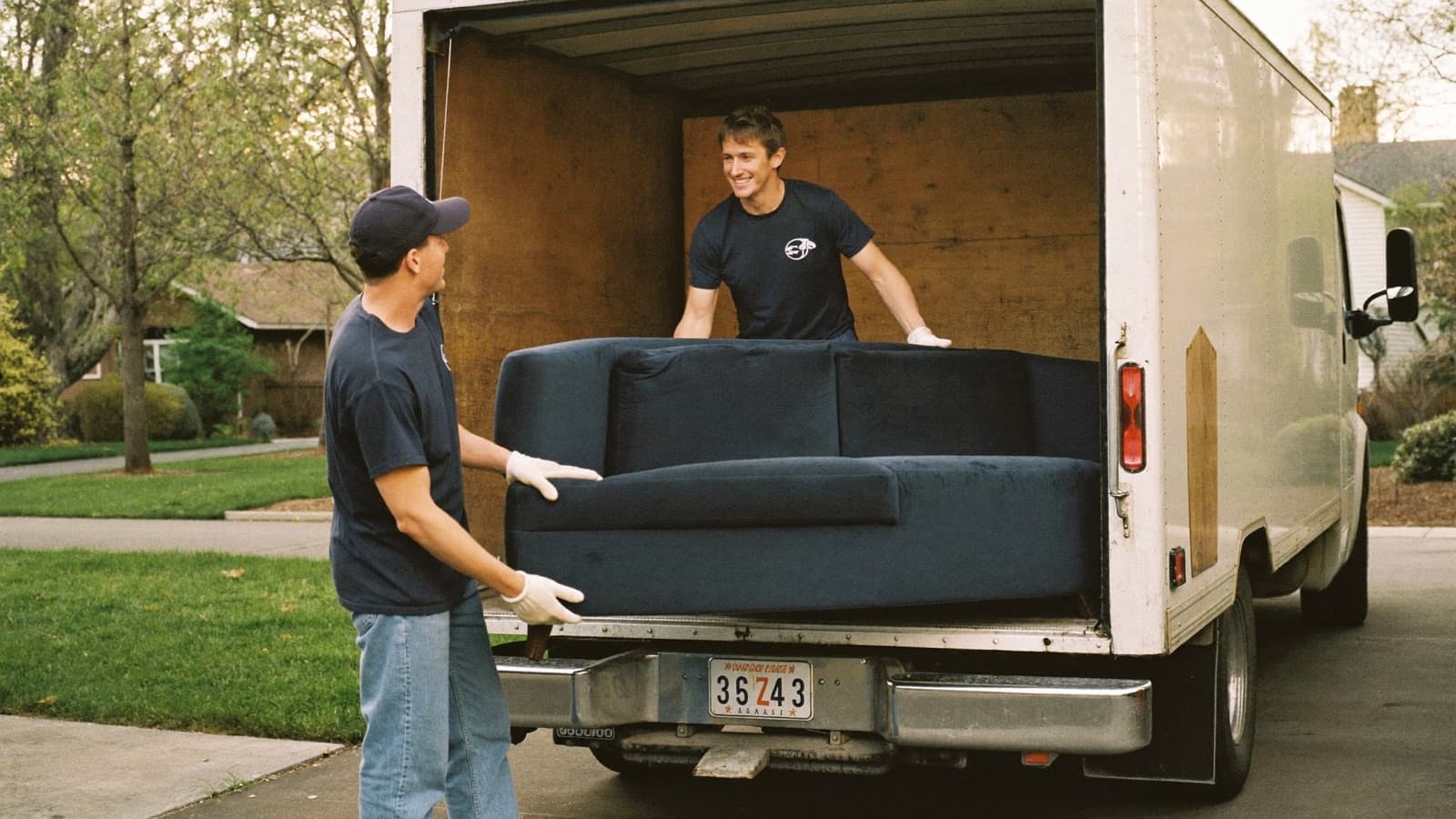
Anyone who passes the video interview gets a paid training day on the truck. Not a promise of a job. One day, paid, riding with my experienced crew.

This is the single best hiring filter I ever found, and it costs you one day of wages. The truck tells the truth. Does this person hustle up the stairs or wait at the bottom? Do they talk to the customer politely? Do they complain by lunch?
Then I asked my crew. The guys who are already on the truck know within four hours whether the new person works hard and fits the team, and they'll tell you straight because they're the ones who have to carry the slack if you hire wrong. If the crew says yes, contracts go out after the training day and the new hire goes on the schedule.
My day-in-the-life videos show what that bar looks like in practice: crews clocking in on time tracking apps at 4:45 a.m., doing photo-verified truck inspections, making space in the box before arriving at a job so they don't burn 30 minutes reorganizing at the curb. That's the standard the training day is testing against.
Before You Hand Anyone the Keys
This is where new owners get burned, and it's the part I'd scream from a rooftop. Before an employee ever drives your truck, you need:
- Payroll set up properly, not cash under the table
- Workers comp coverage, because one wrenched back without it can end your company
- Commercial auto insurance that actually covers that employee driving
- GPS tracking on the truck, and honestly, throw an AirTag in it too
- A signed employee contract, sent right after the training day
If you're still deciding how to classify people, read my breakdown of W2 employees vs 1099 contractors before you hire anyone, because misclassifying your crew is a time bomb. Once they're on board, time tracking with clock-in verification and GPS tracking on the trucks aren't spy tools, they're how you run payroll accurately and know where your $60,000 asset is at 2 p.m. Good software with employee and subcontractor management built in keeps the permissions clean too: your crew sees their jobs, not your revenue.
How My Operations Manager Stole $10,000 From Me
Now the story, because the lesson is in the details.
My ops manager had been my right-hand guy. But we were a two-truck operation, and a management salary on a two-truck business was killing my margins, so I moved him back onto a truck. He didn't take it well. Around Thanksgiving, things unraveled: he reported marital problems, then a missing cash box, then a missing MacBook. Then he stopped showing up without notice. When I sent an employee to knock on his door, he blew up.
I fired him and called the police just to get my trucks and keys back. Over the following days I kept discovering what else was gone: cash, power tools, company electronics, and around $1,600 in charges on business credit cards. All told, about $10,000. The restraining order was denied. Small claims court in California caps at $10,000, so that's exactly what I filed for.
I made a full video telling the whole story: https://www.youtube.com/watch?v=c2tuS8_kaig
Here's the uncomfortable part. Almost all of it was my fault as a system designer, not his fault as a bad actor. I mean, he did the stealing. But I built the environment where stealing $10,000 was easy.
The Controls That Would Have Caught It
Look at what I had set up:
- The trucks parked at his house overnight
- The storage unit was in his name, not the company's
- He held the cash box, the electronics, and the cards, all under one person
- Zero equipment checkout paperwork, so I couldn't even prove what he had
Any one of those is survivable. Stacked together, they handed one employee the whole company. Here's what I'd tell you to set up from hire number one:
- Gated, company-controlled storage. Never an employee's garage, never a unit in their name.
- Regular cash collection. Cash gets pulled and counted on a schedule, not when someone remembers.
- Sign-in and sign-out sheets for every tool and device, with the dollar value written next to each item and a signature.
- Background checks and real employment applications, even when you're desperate for help.
- An employee manual, so expectations and consequences are in writing before there's a dispute.
Boring, by-the-book HR stuff. It feels like overkill when your whole company is you and one helper. It is exactly the stuff that would have either prevented my loss or made it recoverable in court.
Managing and Firing: Culture on a Small Fleet
Hiring is half the job. Keeping a two-truck crew sharp without you on the truck is the other half, and it's the skill that decides whether you ever get off the truck or add a second truck at all.
What worked for me was making the good behavior visible and rewarded. I ran a crew point system that tracked things like Google reviews collected, customers mentioning a crew member by name, and guerrilla marketing like placing yard signs at busy intersections during the route. The crew competed on it. My guys were asking happy customers for reviews on the driveway without me anywhere near the job.
And when someone is a problem, here's my rule: hire slow, fire fast. One person with a bad attitude will poison a small crew faster than any competitor can hurt you. I kept people too long more than once, and every time, the rest of the crew already knew and was waiting on me to act. Your best employees are watching what you tolerate.
FAQ: Hiring Junk Removal Employees
How much should I pay junk removal employees?
Pay depends heavily on your market, so check what movers and general labor earn in your city and be competitive. Remember total compensation includes tips, which on a well-run truck are real money: my crews sometimes pulled $50 to $180 in tips in a day. Whatever you pay, run it through payroll with workers comp. Cash under the table is how owners lose everything in one injury claim.
Where is the best place to find junk removal employees?
Craigslist and ZipRecruiter gave me the best results. Craigslist posts cost about $45 and pull hardest in the first few days. ZipRecruiter ran about $16 per day and can be shut off once you've hired. Indeed works but costs more, which matters when you're a one-truck operation hiring your first helper.
Should my first hire be a driver or a helper?
A helper. Keep yourself as the driver and lead on the truck at first, because the driver role carries the insurance risk, the customer interaction, and the pricing conversations. Promote to driver once someone has proven reliability over weeks, you've seen their driving record, and your insurance covers them.
How do I stop employees from stealing?
Assume good people and build systems anyway. Company-controlled storage, scheduled cash collection, equipment checkout sheets with signatures and written values, GPS on trucks, background checks, and an employee manual. Theft thrives where nobody can prove what existed. My $10,000 loss came from having none of that in place, not from hiring an obvious criminal.
Get the boring stuff off your plate
Hiring gets a lot easier when the rest of your operation runs itself: schedules that dispatch to the crew's phone, clock-ins with GPS verification, and automatic review requests after every job. Autopilot plans start at $49 a month, with GPS and automatic review requests on Full Throttle at $149, still below what many big platforms charge. Check the pricing and start a free trial, then go spend your time finding the right people instead of babysitting paperwork.