Table of contents
- How much does junk removal cost? The quick answer
- How junk removal pricing actually works
- I hired a junk removal company to price my own cleanout
- The extra fees on every junk removal pricing sheet
- Why junk removal costs vary so much
- Franchise vs independent junk removal prices
- How to avoid overpaying for junk removal
- FAQ: junk removal costs
- For the operators reading this
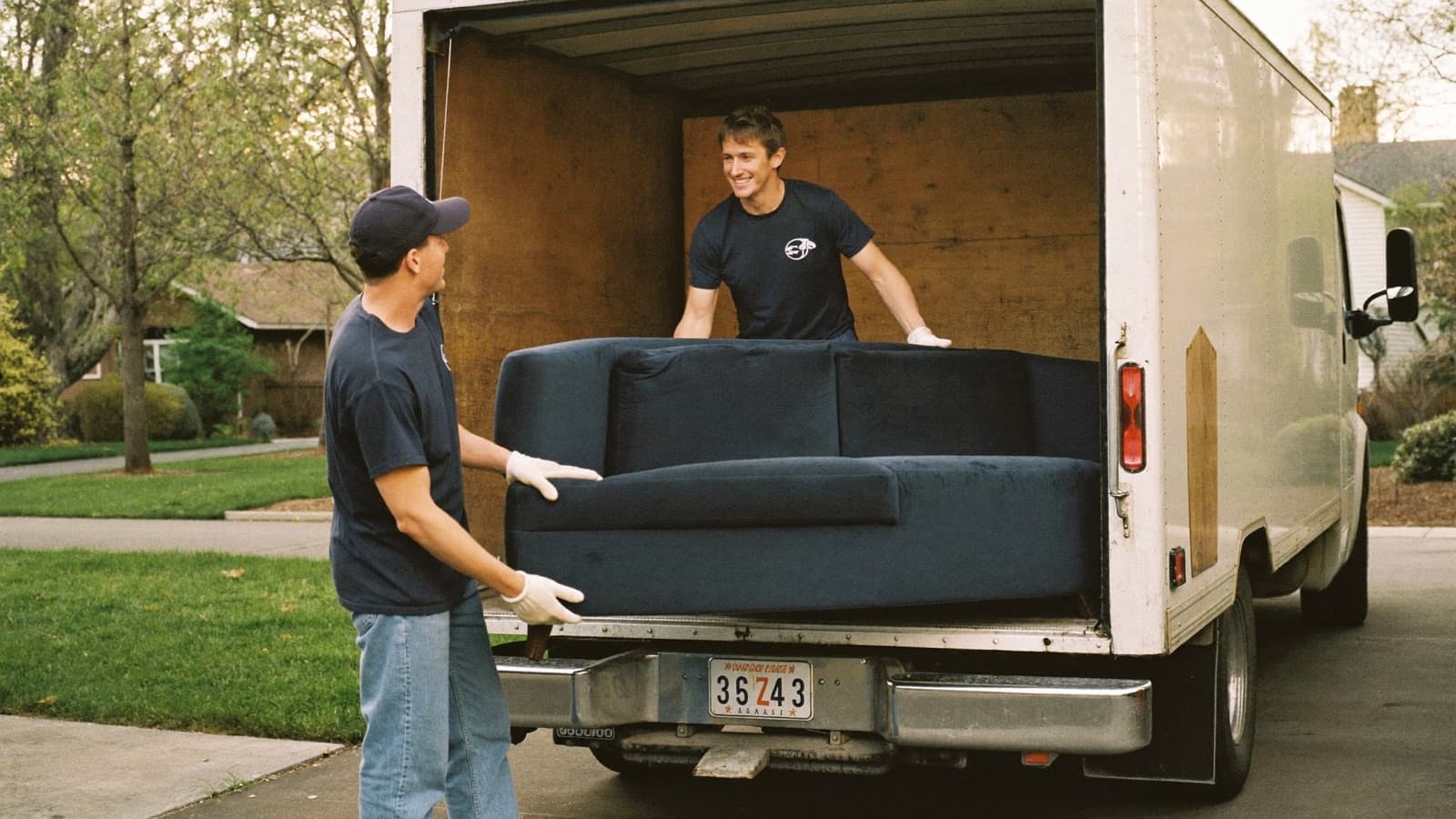
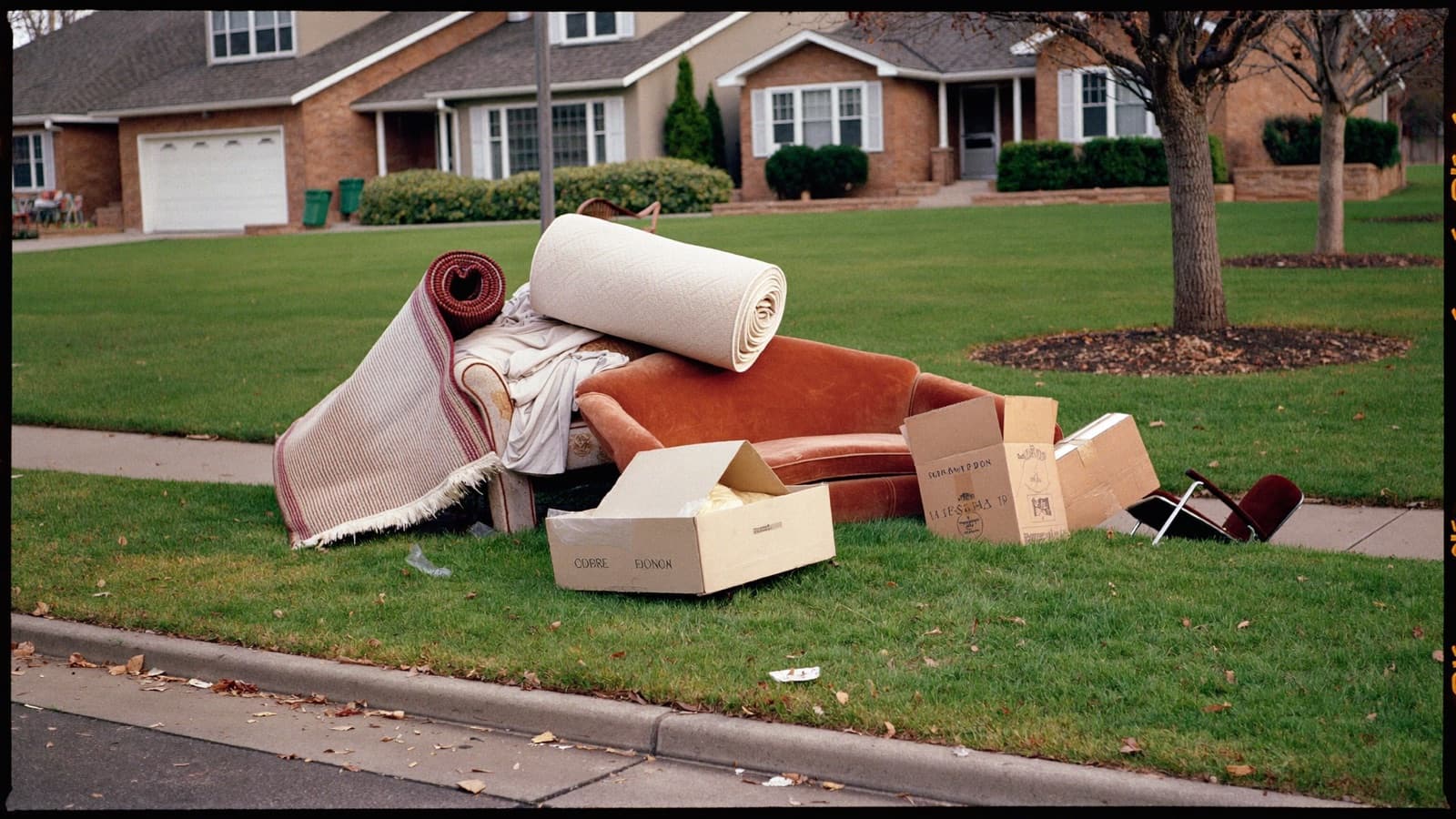
How much does junk removal cost? I can answer that question from a seat almost nobody else has: I built a junk removal company that grossed $1 million in its first year, sold it, and then hired a junk removal company to clean out my own two-bedroom apartment and filmed the entire quote. I have written the pricing sheets, and I have paid the bill.
So here is the straight answer up front. Most junk removal jobs are priced by how much space your stuff takes up in the truck, and in most of the country a full truckload runs somewhere between $500 and $800, with expensive markets like Los Angeles pushing $1,000 and beyond. Small pickups start around $100 to $200. My own apartment cleanout, a real job at a real Los Angeles price, came to $540 for half a truck.
This guide breaks down where those numbers come from: how companies calculate junk removal cost, the real receipt from my own cleanout, the extra fees on every pricing sheet, why two quotes for the same pile can be hundreds of dollars apart, and how to make sure you are not the customer who overpays.
How much does junk removal cost? The quick answer
Junk removal is almost universally priced by volume: what fraction of the truck your items fill. Companies quote in load sizes like a minimum pickup, a quarter load, a half load, three quarters, and a full truck.
Here are real price points, not internet averages:
| Load size | Real example | Price |
|---|---|---|
| Minimum / small pickup | Typical starting price, Los Angeles | around $200 |
| Half of a 14 ft box truck | Independent hauler, Los Angeles | $528 |
| Three-quarter load | Independent hauler, Los Angeles | $725 |
| Full truck, mid-priced markets | Most of the country | $500 to $800 |
| Full 1-800-GOT-JUNK truck | Franchise sheet, Los Angeles | just under $1,000 |
Two notes on reading that table. First, Los Angeles is one of the most expensive junk removal markets in the country, so if you live somewhere with cheaper dump fees and cheaper labor, expect meaningfully lower numbers. Second, minimums exist because a truck and two workers showing up costs the company real money before they lift a single couch. That is also why small loads cost more per cubic yard than big ones, which we will get to.
How junk removal pricing actually works
Understanding the system takes two minutes and immediately makes you a smarter buyer.
The unit of measurement is the cubic yard, a 3 foot by 3 foot by 3 foot cube. Picture an older washer or dryer: that is roughly one cubic yard. A standard junk removal truck holds somewhere in the neighborhood of 12 to 15 cubic yards. The big franchise trucks at 1-800-GOT-JUNK measure about 10 feet by 8 feet by 5 feet, which works out to roughly 14.8 cubic yards. When a crew looks at your pile, they are mentally stacking it into that box, Tetris-style, and quoting you the fraction of the truck it fills. If you want to do the same math on your own pile before anyone shows up, the free cubic yard calculator does exactly that.
The second thing to understand is that pricing is not linear. A half load does not cost half of a full load. On every pricing sheet I have ever seen, including the franchise sheets, the small loads carry a higher price per cubic yard and the full load is the best rate. That is not a scam. Driving to your house, backing in the truck, and paying two workers is a fixed cost whether they take one recliner or a garage full of everything, so the first part of the truck is always the most expensive part.
Third: labor is built in, up to a point. The standard structure I ran was 30 minutes of two-person labor included with each quarter load, so a full truck included about two hours of work. Jobs that take dramatically longer than the volume suggests, like hauling everything down three flights and a long hallway, are where extra charges show up.
I hired a junk removal company to price my own cleanout
When I moved out of my Los Angeles apartment, I hired a local company, Get It All Out Junk, run by a guy who used to work on my own trucks, and I asked him to price me exactly like any stranger who called. Then I filmed it, because I wanted people to see a real quote happen: https://www.youtube.com/watch?v=AVLau_2hQ-g
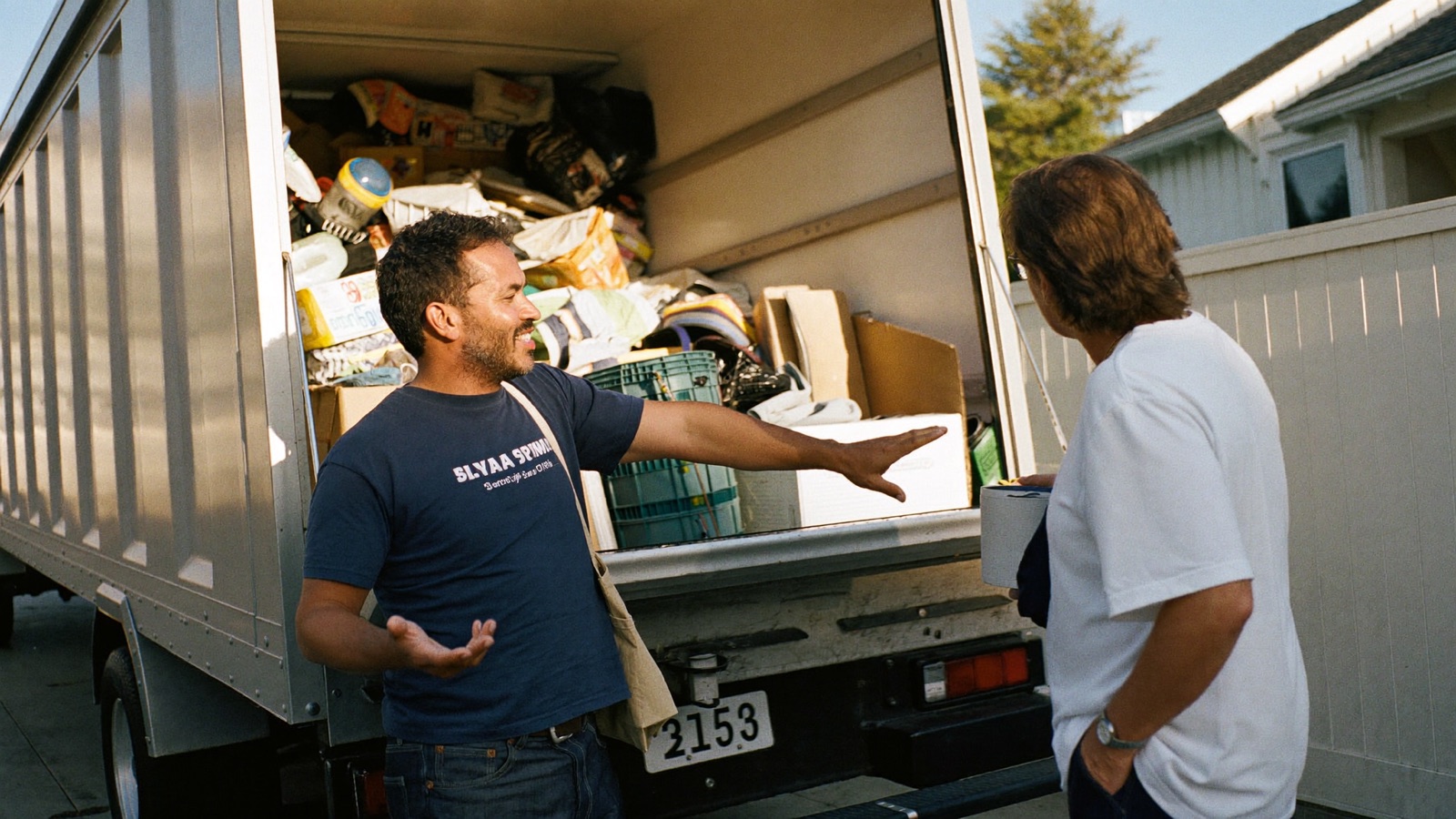
Here is how the whole transaction went. Steve did a walkthrough of my two-bedroom apartment and told me what was going through his head: the job looked like more than half of his 14-foot box truck, probably closer to three quarters. His half-truck price was $528 and his three-quarter price was $725, so my quote was a range between those two numbers, settled by how the truck actually filled.
He also mentioned the fees. Stairs normally cost extra, around $10 per five steps, but he waived that for me, and he knocked $25 off as a first-time customer discount. The crew worked fast, taking the stairs the whole way because I had forgotten my elevator key, and finished the entire cleanout in one to two hours while I ran errands.
The final tally: the load came in at almost exactly half a truck, and I paid $540. I tipped 20 percent on top because the crew earned it. Notice the two lessons hiding in that receipt. The walkthrough estimate drifted down, from "probably three quarters" to an actual half, and I paid the lower number. A good company charges you for the truck space you actually use, not the scariest version of the estimate. And the quote was a range until the truck was loaded, which is normal and honest, not evasive.
The extra fees on every junk removal pricing sheet
Volume is the base price. The fees are where quotes get personal, and knowing them ahead of time means nothing on the invoice surprises you. From the pricing sheet I ran for years, the common ones are:
- Stairs and long carries. Every flight of stairs and every long haul from a back unit to the street adds labor time. My market's version was around $10 per five steps.
- Mattresses and tires. These carry disposal surcharges because landfills and recyclers charge extra to take them. Think roughly $50 per mattress and $25 per tire.
- Heavy material. Dirt, concrete, tile, and roofing are priced by weight, not volume. A trailer can be legally maxed out on weight while looking a quarter full, and the dump charges by the ton, so heavy debris always costs more than it looks like it should.
- Hazardous waste. Paint, fuel, and chemicals are regulated, limited in quantity, and expensive to dispose of. Many companies decline them entirely.
- Extra labor. Disassembly, bagging loose junk, packing scattered items, and genuinely nasty conditions like urine or feces all add billable crew time, often in the range of $75 per person per hour.
One honest tip from the operator side: fees are frequently negotiable in a way base prices are not. Crews are often authorized to waive a stair fee or discount labor to close a deal, exactly like Steve waived mine. It never hurts to ask.
Why junk removal costs vary so much
Get three quotes for the same garage and you might see $350, $500, and $700. People assume someone is lying. Usually, three different cost structures are telling the truth.
Dump fees are wildly local. The landfill was my single biggest job cost after labor. In Los Angeles I paid around $120 per ton to dump, while operators in other regions pay a fraction of that. You can see the spread yourself on the landfill prices tool, which lists real gate fees around the country. A company's local dump rate flows directly into your quote.
Labor costs are local too. A two-person insured crew in California costs the company far more per hour than the same crew in a low-cost state, and legitimate companies also carry workers comp, commercial auto, and liability insurance that all live inside the price.
Healthy companies price for roughly a 70 percent gross margin. That sounds fat until you realize the remaining margin has to cover the truck, insurance, fuel, advertising, and the office. This is worth knowing as a customer, because a quote dramatically below market is not generosity. It is usually a company skipping insurance, dumping illegally, or about to go out of business mid-job. I wrote up the entire operator-side system in how to price junk removal jobs, if you want to see your quote from the other side of the clipboard.
And your stuff matters. A truck full of light furniture and a truck full of wet carpet and tile are the same volume with completely different dump bills.
Franchise vs independent junk removal prices
The biggest brand in the industry is 1-800-GOT-JUNK, and their pricing is a useful benchmark because it is remarkably consistent. I collected their internal pricing sheets from markets across the country, and on the Los Angeles sheet, a full truck ran just under $1,000, which works out to roughly $66 per cubic yard of their 14.8 cubic yard truck. I broke down the whole leaked-sheet collection in 1-800-GOT-JUNK prices: what they really charge.
Franchises generally sit at the top of the market, and they are honest about why: national brand, uniformed crews, insurance, and a truck that shows up when promised. Some of that premium is real value. Some of it is franchise overhead; a franchisee is sending a cut of every job, several percent, back to corporate, and that money has to come from your invoice.
Good independent operators price just under the franchise ceiling, and the best of them deliver the identical service: insured, professional, on time. That was my entire playbook as an independent in LA, and it is why my honest advice as a consumer is to get a franchise quote as your benchmark and at least one quote from a well-reviewed local independent. If you do not know who operates near you, the free junk business map lists independent junk removal companies across the country.
How to avoid overpaying for junk removal
Everything above condenses into a short checklist. This is exactly what I would do as a customer, knowing what I know from the operator side:
- Ask how they price. The answer should be volume, a fraction of the truck. Confident companies explain their sheet without hesitation.
- Ask the truck size. A $500 half load in a 14-foot box truck and a $500 half load in a small pickup are radically different deals. Cubic yards are the honest unit.
- Send photos before anyone drives out. Most companies will give you a tight range from photos, which saves you from on-the-spot pressure.
- Expect a range, not a firm phone price. Serious operators quote a range on the phone and firm it up on site. That protected me as a customer: my job was quoted at half to three quarters, and I paid the half price because that is what the truck said.
- Ask about fees upfront. Stairs, mattresses, tires, heavy material. Get them named before the crew starts.
- Be suspicious of dramatic lowballs. The cheapest quote often belongs to the company with no insurance and a habit of dumping your stuff somewhere illegal, which can come back to you.
- Book the full load rate if you are close. If your pile looks like 80 percent of a truck, adding the rest of the garage is nearly free per cubic yard. The full load is always the best rate on the sheet.
FAQ: junk removal costs
How much does junk removal cost for a full truckload?
In most of the country, a full truckload runs $500 to $800. In premium markets like Los Angeles, expect closer to $1,000, which is what the 1-800-GOT-JUNK pricing sheet shows there. The full load is the best price per cubic yard on any company's sheet, so filling the truck is the most efficient way to buy junk removal.
Why won't junk removal companies give me an exact price over the phone?
Because the price is set by how much truck space your items actually fill, and that is genuinely hard to judge sight unseen. Reputable companies give a range from photos or a phone description, then confirm on site before starting work. My own cleanout was quoted between $528 and $725 and came in at $540 when the load turned out to be exactly half a truck.
Should I tip junk removal crews?
Tips are not required, but they are appreciated and common for crews who hustle, especially on jobs with stairs or heavy items. When I hired a company for my own apartment cleanout, I tipped 20 percent. As a former owner, I can tell you crews absolutely remember the customers who tip.
Is junk removal cheaper than renting a dumpster?
They solve different problems. Junk removal includes all the labor: the crew carries everything out of your home, loads it, sweeps up, and handles disposal, usually in under two hours. A dumpster is cheaper per cubic yard but you do all the loading yourself and it sits in your driveway for days. For a cleanout where furniture must come down stairs, the labor you are buying with junk removal is most of the value.
What is the cheapest way to get rid of junk?
Donate or sell anything with value first, since that shrinks your load size and your price. Then group everything in one accessible spot, like a garage or driveway, because scattered junk means billable labor time. Finally, get multiple quotes including a local independent, and if your pile is close to a full load, fill the truck, since the full load carries the best rate.
For the operators reading this
If you run a junk removal company and you just read a customer-facing price guide nodding along, the harder question is whether your own pricing, quoting, and booking actually run this smoothly. Autopilot plans start at $49 a month for estimates, scheduling, and invoicing, with the full phone system on Full Throttle at $149. See the pricing and start a free trial, and quote your next job like the companies that win them.